Monday, May 12, 2008

A home at last?!?!

So what have we been doing lately? From April 14 to May 5th we were in Managua, Nicaragua. It`s the capital of the country but it has been destroyed time and time again by earth quakes so it has an unusual feel to it. It is clusters of subdivisions (if you can really call them that)sprawled about the city.


Jay has improved the computer system at the Nehemiah center, which is a collaboration of 9 different mission organizations that operate out of Managua. The unique thing about this group is that locals are involved and active in a huge part of what goes on. Jay learned more about routers and networking. He also discovered a new program called Ubuntu. Dave (the guy who became our contact and toko care of while we were there) and him have had an excellent time learning how it works and creating an installation CD for the whole office. Many evenings were spent talking computers, trying to trouble shot and bouncing ideas off each other.


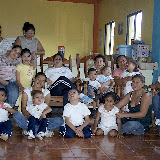
I was working with kids with disabilities. It was spectacular. The kids vary in age and what brings them to the center: everything from autism to hyperactivity to developmental delays. I really enjoyed the one on one work that I was able to do with the kids. One of the teachers took me under her wing and was glad to have an extra pair of hands. She taugth me a half hour session designed for kids who have problems speaking. It is ways for them to exercise there jaws and mouths. By my last day there the kids were calling me teacher. I was quite honoured. Michelle is the over seer of everything imaginable and she`s a busy woman. We had alot in common and we were able to encourage each other.


Now for our social life... Sunday we went to English speaking church. It was so good to be able to sing along. We spent an afternoon chatting with acouple about Peru and eating ice cream. Then we played ultimate frisbee and hung out with a group of people our age at their sweet apartment with a pool. They have a spacious kitchen so I made pizza for everyone. Another night we were invited to a dinner where a guy spoke about his recent trip to Isreal. Tuesday night Michelle and Dave took us out to dinner. I had a passion fruit margurita. Yummy! Wed. nights were busy as there was soccer and Bible study. It is such a wonderful atmosphere to be a part of.

Volunteering in Managua

Sunday, May 11, 2008

Un Paro De Las Transportistas - Transportation Strike

A few days before we planned to leave Managua we got some interesting news... there was a rumour of a national transportation strike. If it actually happened, all busses, taxis and microbusses in the country would (theoretically) stop working. For us, that would mean potentially being in Managua until the strike would be over (which made our friends in Managua chuckle, since we had been extending our stay bit by bit each time we talked to them).

In this part of the world there aren´t many unions that are as organized as the ones at home, particularly the Nicaraguan public transportation organizations. The ''transportistas'' are a collection of individual drivers and cooperatives. This means that a nation-wide strike takes a while to actually get going (if it happens at all). So we wondered - will the strike actually happen? if it does, who will stop working (taxis, busses, microbusses)? what kind of demonstrations / blockades will happen? are we going to get stuck in Managua indefinetly until this thing gets figured out? Managua has been fun, we´ve met some amazing people, but weren´t particularly excited about being there until the slow-moving wheels of Nicaraguan politics sorted things out.

Monday morning came and went, our busses to the Nehemiah Center worked just fine, so we thought maybe things had blown over. But, then came Tuesday morning - the day we were hoping to go to Granada. Very few taxis were on the road, and the ones that were looked rather nervous. On the news we saw crowds of drivers surrounding working taxis at intersections, taking their 'Taxi' sign from their roof of their cars and writing 'Al Paro' on their windshields. 'Al Paro' translates directly as 'To The Strike'. The word was there actually was a wide spread strike happening. Officially all taxis and busses throughout the country (except within the city of Managua). This meant, no busses to Granada - at all.

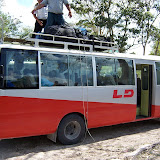
The only thing to do was to shoulder our packs and see if we could find somebody willing to take us to the Tica Bus station. Our plan was to try to hop a ride with this international bus line to Granada. We hoped this Costa Rican run bus company wouldn´t get involved with a Nicaraguan strike. We did find a taxi driver, who after picking us up changed the sign in his front window to ''out of service'' to be less consipicuous (though we thought driving 2 gringos around was fairly obvious). We got to the Tica Bus station without incident and then I went to see if we´d be able to get a ride with them to Granada. The guy at the front desk tried explaining to me that this wasn´t possible because the busses from Managua didn´t stop in Granada. But - he knew a guy. ''Great,'' I thought, ''everybody know´s a guy, and they always have the best price, with the safest car.... but we are pretty stuck.'' So we agree to have him call his buddy who will drive us to Granada for $30 (OUCH!! the microbus we were hoping to take would have normally cost us $3). A few minutes later ''the guy'' showed up in his white and yellow Taxi - not the inconspicuous unmarked vehicle we were kinda hoping for. But on the up side it was a relatively new Yaris, with working seatbelts, trunk, shocks, no broken windows or crazy dingly balls all around the dashboard. All in all, the nicest taxi we have seen on our entire trip, so we decided to bite the bullet and go for it.

As we drove through Managua the roads were pretty quiet and we avoided most of the main intersections. As we left the city we saw rows of busses that normally seviced the routes south lined up along the road. As we drove by our driver pointed to some of them and said to me ''there are your busses to Granada''. Good thing we didn't go to the regular bus stop and hope one came by, because we would have been 100% out of luck. Going a little further he started to chatter away on his cell phone to some other drivers he knew, and I managed to piece together that he wasn´t actully all that sure we´d be able to get through to Granada at all!

I really began to wonder when we got to a dead stop just before the city of Masaya - the most major intersection on the highway between Managua and Granada. After unsuccessfully trying to find a way around the traffic jam (which we knew was caused by the striking transportation workers) we inched our way forward to see what the situation was. When we got to where all the busses were parked along the side of the road, and the drivers were demonstrating we could see things were relatively orderly and peaceful. None of the burning tanks of fuel, rubber bullets and tear gas we later heard got used in Leon. We did get a bit nervous and made sure the doors were locked when our car was swarmed by some of the striking drivers. But, they seemed to be satisfied with a bit of somewhat heated exchange with our driver and writing 'Al Paro' on his windshield. They couldn´t take his taxi sign because he had already put it in the trunk. After that, we were a bit nervous and on the lookout for another more serious blockade, but made it uneventfully to Granada.

Hiring the driver was expensive, but turned out to be a good move. Since then the strike has become more serious and it would have only been more difficult to find transportation. We cut short the last of our plans in Nicaragua and decided to take the Tica Bus all the way to Panama after several great days in Granada. From the sounds of things it has been making an impact throughout the country, where the majority of people don´t have cars and depend on the taxis and busses for any of their transportation.

The markets in Managua are having a harder time staying stocked, the outlying towns are having problems getting supplies delivered and rice prices have gone up (again). When asked if people are stocking up on food in the event of a shortage in the near future, a local market vendor in Managua said people are spending LESS because they´re having a harder time making money. The stike is definetly having a high profile impact, and (so far) has wide spread popular support. But, so many of the people affected (drivers included) live day-to-day, with very little (if any) savings. There is no such things as union-supplied strike pay here. How long will they be able to hold out? How long will things stay relatively peaceful? Does the government care?

One of the bus co-ops has publically stated they are prepared to strike for a month. As of a couple days ago the government hasn´t shown any interest in even talking, hoping the multi-faction strike will fall apart all on its own when everybody involved really starts feeling it pinch. The ones who feel it the most and the quickest are those who live day to day... and depends on the public transit system in one way or the other to facilitate their income. The trouble is, that is the majority of the Nicaraguan population.

What is at issue? The Transportistas want a fixed gasoline price throughout Nicaragua. Their fare prices are government regulated and after several increases over the last year the fares cannot be raised any more without putting them out of reach of those who need the busses the most. But, gas prices keep going up. Income staying equal, costs going up, how can they make a go of it?


Suspicious facts about the government's handling of oil in Nicaragua that are making people angry:

  • Prices in neighbouring Honduras are significantly cheaper
  • Nicaragua SELLS oil to Honduras
  • Hugo Chavez (Venezuala) has made a deal with Daniel Ortega´s Sandinista government where they can buy Venezualan oil at a very economical rate, with a long term payment period, and a percentage of which they don´t need to pay for at all.
  • this oil (and its profits) are managed by a Sandinista company, set up for this express purpose
  • the only bus organization that receives government subsidies is the Managua City busses... which is owned by a Sandinista
  • there is little to no transparency about how the profits of buying cheap Venezualan oil and selling it to Honduras are being managed. More specifically to WHOM are the profits going??


So, to all appearances, Daniel Ortega the self proclaimed 'man of the people' - Sandinista protector of the poor and down trodden - has some sneaky oil deals on the go. Who is financing them? The average bus driver, taxi driver and rural lady who needs the bus to get her vegetables to the market. I hope that the strike can shake some better deal out of the government, and I really hope that it happens soon enough that the average Nicaraguan doesn´t have to pay too dearly for it.

That being said, I´m glad that we aren´t trying to traipse around Nicaragua at the moment.

Home Home on the Range

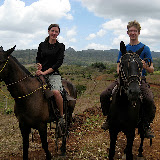
Santo Tomas is a cowboy town. They were everywhere, all decked out in big buckles, pointy toed boots and stylish hats. This past weekend ( April 17 to 19th) we were graciously invited to join a group of teachers from the local Christian school to a ranch. It has become an anual tradition to visit with the family of prior students. In the past it has included branding cows ( which is what we thought we'd be doing) but it had to be done a week or two earlier. You can´t wait too long or else someone can take the cows before it is clear who they belong to.

Though uncertain about getting on and riding a horse we all had to give it a try and spent most of the afternoon doing that. Good thing they were so tame and easy going. When we were not horse back riding we were relaxing in hammocks or eating fried chicken and baked potatoes or other typical Nica food ( tostones - fried plantain, gallo pinto - rice and beans, jalepeƱo cream sauce over tender meat). Our first night we roasted hotdogs and made smores by the bonfire. Now that was certainly a taste of home!

We went to a rodeo. It was pretty comical because we all went with pretty big expectations and were all disappointed. There was alot of dancing, several horse shows and bull riding, with a little lasoing. Ohh and lots of talking. The band was awesome. People went to socialize and party mostly.


the Visit to the Ranch

Sunday, May 4, 2008

My Visit to a Nicaraguan Prison

For my prison-visit-story to make some more sense, I am going to try to give you a brief snapshot of some of Nicaragua's recent history... please bear with me.

As seems to be fairly standard for the Latin American countries that we have visited, the last 100 years of Nicaraguan history is a complicated combination of dictators, puppet presidents, coups, rebellions and American interference.

The political figure that overshadows almost the entire 20th century is the Somoza dictatorial dynasty. This first began in 1936 with Somoza Garcia (I'll call him Somoza #1) taking the reigns of power, and from then on, whether directly or through puppet presidents and rigged elections, the Somozas (#1,2 and 3) ran Nicaragua until their overthrow in 1979 by the Sandinistas. Somoza #1 can claim such accomplishments as:

* orchestrating the assassination of Augusto Sandino in 1934 (now a national hero, Sandino led the rebels fighting against the intense American control of Nicaragua - which meant fighting against the American Marines until their withdrawal in 1933 and then government's American-trained-and-armed National Guard)
* in the early 1940's stealing the landholdings of the many wealthy Germans who had been in Nicaragua since the late 1800's on ranches, coffee and banana plantations. This ended up giving the Somoza family direct ownership of land covering the same area as the entire country of El Salvador
* being assassinated by the poet Rigoberto Lopez Perez in Leon in 1956. Perez left a note describing his plan, disguised himself as a waiter to get into the party Somoza #1 was attending... then shot him. Perez was immediately killed, and has been a national hero ever since.
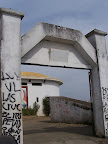
* creating the Coyotepe Prison in 1937. This is the prison that I visited yesterday, and is one of the most terrible places I have ever set foot in.

After the assassination of Somoza #1, Somoza #2 ran the country as either president (or direct controller of a few puppet presidents) and Somoza #3 was the head of the National Guard. The National Guard continued to be trained and armed by the US, which was a strong supporter of the Somoza regime, because they were considered an anti-communist force in Latin America. The Somoza's seemed to get progressively more brutal and repressive, with Somoza #3 having the legacy of being the most terrible of the bunch of them.

By the time Somoza #3 came around (after Somoza #2 died from a heart attack in 1967) there were 3 secret prisons throughout western Nicaragua. One of which was Coyotepe. This place was originally a fort built in 1893 for the civil war that at that time was being fought between the Liberals and the Conservatives. At that time it basically consisted of a stone perimeter wall punctuated by several small towers. In 1937 it was "remodeled" by Somoza #1. The outer wall remained, but inside the walls 2 underground levels were created and filled with cells. There was a third level that is now closed up due to a collapsed tunnel, which was rumored to have been used for everything from storing munitions to bodies of prisoners. Depending on the cell size there was between 15 and 50 prisoners in each cell, where they were fed one meal a day of beans, and slept on the concrete floor. In the rainy season the floors were typically covered with water and dirt that streamed in through the smalled barred windows. To pass light into the second level cells there was a 15 ft long tunnel that was perhaps 3 or 4 feet square that ran on an angle from the top of the cell wall up to the ground level. There were bars on the cell-side of the tunnel, and a gate at the ground level. That was because these were used as a form of particularly cruel imprisonment. Up to 5 people at a time were placed here, for 1 week with no food. They were unable to stand because the tunnel was only a few feet high and the floor was on a 45 degree angle. They could not lie down because there were too many of them in the small space, so they had to spend the entire week hunched over their knees.

On the second level, in a windowless area that was almost completely dark, are the "special cells". This is where prisoners would be brought to be tortured. There were cuffs on the walls that would hold the prisoner's hands above their head while their captors utilized a vast array of gruesome techniques to extract information. They were cut, whipped, burned with cigarettes, had their fingernails torn out and more terrible things I need not describe here. The holding cells in this area were about 6 feet high, with a metal grate for a ceiling. The guards would make use of this "birds eye view" to hurl all kinds of filth and abuse down upon the prisoners who waited there for their turn to be chained to the wall at the end of the hallway.

It is not known how many unfortunate souls lost their lives in this awful place. But to give you a sense for the scale of what was happening, the first level could hold 400 prisoners, the second level could hold 200, people were rarely released, and this prison was in active use for over 50 years.

I wish that I could say the place was closed down when the Sandinistas overthrew the government of Somoza #3 in 1979... but that was not to be the case. It was to be used for the next 10 years - throughout the American funded Contra War. The first act of the Sandinistas was to make a switch: in Coyotepe the guards became the prisoners and the prisoners became the guards. Though this may seem like just punishment, even worse atrocities happened then than ever before. Revenge, though immensely appealing, did not heal. So, from the 1979 Sandinista take-over until the 1989 change of government and the end of the Contra War, Coyotepe was still a place of horror. Something that is particularly frightening, is that there is a very real possibility it will be re-opened if another war broke out here in Nicaragua.

In the early 90's it was abandoned for some time. People did venture there - stealing the iron bars, painting graffiti on the walls and holding Satanic rituals in the darkness. Government after government have stated they want to put money into turning it into a museum and memorial, but thus far the talk has not been backed by any action. Perhaps it is better this way - raw, rough and real - not glossed over or made more palatable (or more flattering to the current Sandinista government). Leaving the prisoner's desperate graffiti and (possible) bloodstains on the walls, having no extra lights to drive away the bats, moths and gloom, gives this place the ability to make a deep and non-too-gentle impact.

It is now being cared for again, not by the ever-talking-rarely-acting government, but by the Boy Scouts of Nicaragua. They are incredibly well informed guides, and keep the place under 24 hour watch to keep away those who are interested in seances or spray painting, drinking or drugs. That dedication amazes me - this is the last place I would want to be alone at night. Our guide told us some of his colleagues claim to have seen ghosts. He's not 100% about how real the ghosts they saw were - but he knows that he heard foot steps on the lower level stairs when there was definitely nobody else there. He also told of Christian pastors who have visited this place, and sensed evil spirits there. I for one, would not dispute what they sensed - this place embodies the evil that we can inflict on each other in the name of a political cause, quest for power or search for revenge. Many of the stories the guide tells are from those who were held prisoner here - who came back to see it empty - and shared their stories through their tears. So, here I have passed some of those stories on to you.

Coyotepe - a dark place that embodies some dramatic examples of the brokenness that exists in this damaged creation. It is not a fun visit, it is not a pleasant story. But, it we ignore these things and pretend these stories never happened, then how will we be prepared to act when our time comes to make a difference?

For some photos of my visit to Coyotepe, click on this link:
Sunday, April 13, 2008

Esteli and Matagalpa

We spent a record 3 hours in Guatemala City before we boarded a Tica bus (an international, first class company). After two days of riding through 4 different countries, several border crossings and one night in San Salvador we arrived in Nicaragua, Esteli to be exact.


Maybe we were tired but our first impressions of this farming community were unpleasant. There has to be a first for everything!! It was sad because no one greeted us on the streets. We felt like we had to pry information out of the local toursist bureau. The museum in town was closed for renovations. And worst of all the phone call that I made home had the worst connection ever. I heard 1 in 4 words that my mom spoke when I wanted to talk with her sooo badly (it had been over a month and a half). The food was delicious with huge portions.


The most activity we saw was when we went to the bus station to get a ride out of town. As we walked the streets to get there were impressed with the lasting infrastructure ( sidewalks, sewage systems, firetrucks, ambulances, and dump trucks) of foreign aid after a natural diaster.


The bus ride to Matagalpa took us through some of the most fertile areas of the country. We passed rice and coffee farms. A small town we passed through had stalls set up displaying the largest carrots I have ever seen. As the bus stopped people jumped on the bus selling onions, tomatoes, potatoes and cucmbers. The vendors had to be quick or they went for a little ride before they could jump off. Other areas were dusty hills with scruffy trees growing on the sides as the dry season is just about done.


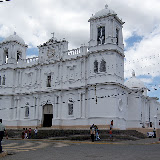
Matagalpa is known for their coffee and black pottery so we made sure to visit a coffee finca ( farm) and bought pottery pendants for on a necklaces. Though coffee season is finished we were able to enjoy the scenery and tranquility of this German owned plantation. We spent time hiking about the property which a mix of trails around a lake and checking out a bit of the buildings and old equipment that was a round. Strolling the streets, buying hotdogs, drinking beer and eating chocolate cake at a great cafe/bar, smiling, friendly security guards and an unusual simply built church were all different things that we experienced. We stayed for three nights in the smallest room yet.


Esteli and Matagalpa

Thursday, April 10, 2008

A Little Taste of Home

This is sort of stepping back in time a little bit but after a 3 week vacation from the blog I thought it was long over due to share with you what we did in Antigua. Antigua was the last place we stayed in Guatemala.


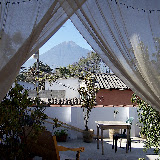
Antigua has an amazing reputation in the back packers world because it reminds everyone of home. It is a dynamic,gorgeous city that is full of resturants, cafes, chocolate shops and a bagel place. The view from the streets is awesome as there are volcanoes in every direction. One of which is still active and occassionally you would see plumes of smoke rising to the heavens. The scars from damaging earthquakes are most evident in the old cathedrals and colonial buildings.


Parents of one of Jay's good friends generously invited us to join them visiting a Guatemalan friend of theirs. We were delighted as we were spoiled over the following days. The highlights included relaxing at the beach house, cooking deliciuos meals, drinking tea as we discussed life, and sleeping in a luxurious room. We felt refreshed after many stimulating conversations and lots of down time .


Adventures in Antigua

Monday, April 7, 2008

Sights and Sounds of Guatemala


  • Our Anti-malaria medication that we take weekly makes Jay have diarrhea the day after we've taken it.

  • I found myself wishing that I could get laundry lesssons. Washing clothes by hand is not as easy as it looks!

  • Who knew that being in the back of a small pick up truck holding on for dear life could be as entertaining as TV - the view breath taking, great people watching opportunities and it is cheap,

  • Samana Santa was unparalled

  • Chicken bus is not a figure of speech! Clucking baskets and bags are a common sight. The grunting ones worry me - bacon in the morning :0) So far we've squeezed 28 people onto the back of a truck and 27 into a mini-bus collectivo.

  • The most deadly mode of transportation is the lavishly decorated school buses that are driven at top speed. The death defying driver assistants hanging precariously off the back, on the top or out the side door, no matter how close the cliff's edge is or how fast the bus is moving. The air horn used to get people's attention and to notify the masses of their presence is not appreciated at 4 am.


Sights of Guatemala