Tuesday, February 26, 2008

Tortilla Making

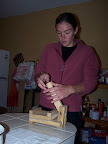
After a girl turns 15 she is eligible to be married (dads live in fear of that day.) Tradition also has it that the woman must be able to make a thin, round corn tortilla. This is a sign that they are able to take up the household responsibilities. You'll often hear the tap tap of tortillas being prepared around meal hours as the women put this time tested art to good use. Some use a press for convienence, but for parties the good old fashioned way is used.
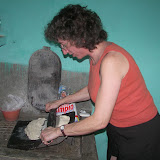
So with Jay's parents in tow we headed over to our adopted family's home to give it a try. Well they say that practice makes perfect, so we all have a lot of work to do!


Following are the basic steps involved in making the tortilla and they are mostly illustrated by our photos.


  1. Water is added to the corn dough (pre-purchsed, but typically made by grinding kernels of corn) and then made to a smooth, sticky consistency by kneading it out with a stone rolling pin on a stone surface.

  2. A small glob of dough (about the size of a pingpong ball) is made into a ball.

  3. The ball is then flatten in your hand, so it is about 1 cm wide.

  4. The dough is placed on a piece of plastic that is about the size of a small dinner plate. This helps to ensure it doesn't stick to the counter.

  5. With the palm of your hand you flatten the tortilla, starting from the center out, while gently spinning the tortilla or the plastic. Ideally you want a thin, circular tortilla.

  6. Place tortilla on pre-heated griddle (ceramic or metal) by peeling the plastic away from the tortilla. Transfer tortilla to your other hand with about half of it resting on your palm only.

  7. Lay it down gently, while removing your hand as the tortilla touches the hot surface.

  8. Monitor your tortilla by how it smells. It is ready to be flipped to the other side when it is lightly cooked. It will be golden coloured.

  9. When ready to flip, gently grasp an up-turned edge with your fingers and switch sides.
  10. Repeat if necessary to ensure both sides are evenly cooked through.

  11. Sprinkle with a little salt if you desire and eat warm.

It is more difficult than it looks. A hard surface is essential. The less handling, the better. Our success rate was not very good!


Tortilla Making

Sights and Sounds of Mexico - A Final Reflection ( Well For Now)


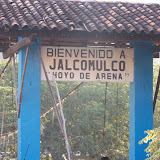
Daily Life In Jalcomulco

"You can't really capture Mexico in photographs or paintings, because they leave out two essentials, smell and sound."


A quote from Piecework by Peter Hamill


As a testimony to the author's conclusion, this blog has been our way of trying to portray those sounds and smells that we have encountered and share them with you. The pictures are the beginning of enhancing your understanding, but the words help to bring your senses to life. I hope that you have enjoyed the stories. Our time in Mexico is quickly drawing to a close as we nervously look forward to moving on. Our first stop will be Belize and from there we will continue through Central America. Our rough time line is to have Central America completed in 2 to 3 months. Our different philosophies about traveling will be tested as we rapidly move through some places and instead spend bigger chunks of time in one place ( at the expense of seeing everything.)


In conclusion to our time here we thought it stewardly to wrap up with some ideas we've pondered and conclusions that we have come to. Some will be funny, while others will be a challenge to you ( as they were for us.) "You can't really capture Mexico in photographs or paintings, because they leave out two essentials, smell and sound."

Time
. Since Jay returned from his trip to Nigeria he has become a slow walker ( much to my dismay sometimes.) Here the pace of life is slow, with much time spent sitting, gathered with friends or family. There are very few cars and instead people walk or take public transportation. With all of this combined (and much less hectic schedules) people are able to "just be" more.
. The siesta is still a major part of life. It takes place mid-afternoon after they've eaten their biggest meal. They've completed the majority of their work and since it is the hottest part of the day, why not take a break. People take a break from their work and put their feet up. Often you'll see our lady land (Dona Rita) lying on the couch watching some TV. They make up for it by working later at nights if necessary. Nights and hang 'n out start at 8 or 9 pm.
. "Ahorita" can mean anything from I'll do what you have asked in five minutes to five months. Meaning when the time is right for them the job will get done.
. If people aren't interested in a social engagement rather than flat out say no they won't be coming they say, which is considered rude, they say yes, even when they mean no.
Church Etiquette
. Pretty much every town has a large church in the down town core. The majority of the churches are Catholic (or some blend of Catholism mixed with native beliefs.) The churches are a focal point. Bellctowers are an important aspect of community living. The bells are rung to communicate with all those living near-by In Jalcomulco if there is a holiday, party or a funeral the bells will toll. It is completely random as to when they will ring, how many times the bell will be rung and for how long it will continue
. As people pass by churches you'll see them "cross" themselves and put their finger to their lips as a sacred kiss. Religion and it's many rituals still have a central role in peoples' lives.

Cuisine
. Fridges are not common here. In fact we have often seen them used as storage, rather than to keep things cold. Maybe it is a power consumption thing or it just could be that they make enough only for a day or two, so there a few left overs. Maybe the fridge is broken. Since they buy food on an as needed basis they don't have to store much in the fridge either.
. Most people have gas stoves, which are fuelled by large propane tanks ( maybe ~ 100lbs.) Once empty you call the propane company, or stop the guys as they drive by, and they switch it for a full one.

. Jay prefers shots of straight cana ( the local moonshine brewed with sugarcane) or tequila to vodka shots.

. Tequila is a much better with either carbonated apple or grapefruit juice.. Lime goes well with most light beers.

. We can handle jalepeno peppers much better now. Biting a seed still makes me sweat though.


Parties
. Quinceniera is probably the biggest celebration in any girls life. It is her 15th birthday, which is a celebration for her coming of age. It rivals a woman's wedding. The girls dress in gowns that are like what a bride would wear but they are any colour. They go all out with flowers and jewllery, in fact families save for years in preparation for this day. Mass is celebrated with friends and family, including 14 guys and girls who are the attendants. They must also be dressed fancy, often in matching colours. The parents share a "this is your life" type reflection. Many pictures are taken before everyone goes to a hall or to the street party where there is dancing, eating and partying that continues all night.
. In Jalcomulco they have a communal wedding day on Valentines. A couple makes their relationship public by leaving the community for a time with out really giving much warning or explanation. Eventually people figure it out. They then start their married life together and wait until the next Valentines Day to make it legal.
. Discos are big. They start at 9:30 and go till 2 am. Here you can hear the music for blocks since it is out on the street.
. Any time there is a celebration fire works are set off. This may happen at any time of day.

Bathrooms
. In public places you often have to pay to use the facilities. Think of it more as a tip to the person who does the cleaning. They may not have toilet paper dispensers, instead they hand you a thick, nicely folded strip of tp.
. Some toilet paper is scented (baby powder or chamoille are common.) It has nice little designs and pictures on it.
. Not all toilets have seats. Good thing it's warm here.
. Only in fancy places or in well to do people's homes are there shower stalls. Everyone else's bathroom is an open concept room. You gotta make sure to try to keep everything dry.
. Water may not come out of a tap. People have cement water reservoirs ( ~ 4' tall and wide and 5' or 6' long), in which the taps are left on for certain parts of the day because that is when there street gets water. It is then pumped up to a black tank on their roof ( but not everyone has one.) There is a local well that people can go to regularly. You can also pay to have some one fill up your tank.
. Occasionally there will be unpleasant smells as you shower. The shower drain is the same pipe as that used for sewage from the toilet. The shower drain has no trap, so the smells waft upward.


Culture
. In order to attempt to create order on the street while people drive, there are brave people who risk their lives by whistling and flagging traffic. They are dressed up very official looking. They stand in the center of streets waving one group of people forward and telling the other to stop. When it is go time, you hear them blow that whistle. Sometimes they are insync with the traffic lights, other times they are not.
. In an attempt to slow people down there is wide spread use of speed bumps or topes (toe pays) at they are called here. They have often been known to appear out of no where and grind the bottom of cars. We've have seen them made of cement, metal (shaped like half a coconut), rubber tires, sand bags, ropes and rocks.

. Though I was worried about geckos at first ( I imagined one scampering on me while I slept) I have come to enjoy them. There are transulscent ones that come out at nights and chirp. Other times you'll hear a little guy scurry in the bush and if you are quick you'll see them go. . Businesses are much more family oriented and run. Kids are much more involved, whether they are 6,16, or 26.. We love the regular emails reminding us that we are missed. Or those telling us about life back home.. Though I was worried about geckos at first ( I imagined one scampering on me while I slept) I have come to enjoy them. There are transulscent ones that come out at nights and chirp. Other times you'll hear a little guy scurry in the bush and if you are quick you'll see them go. . Businesses are much more family oriented and run. Kids are much more involved, whether they are 6,16, or 26.. We love the regular emails reminding us that we are missed. Or those telling us about life back home.

. Though I was worried about geckos at first ( I imagined one scampering on me while I slept) I have come to enjoy them. There are transulscent ones that come out at nights and chirp. Other times you'll hear a little guy scurry in the bush and if you are quick you'll see them go. . Businesses are much more family oriented and run. Kids are much more involved, whether they are 6,16, or 26.. We love the regular emails reminding us that we are missed. Or those telling us about life back home.
. Though I was worried about geckos at first ( I imagined one scampering on me while I slept) I have come to enjoy them. There are transulscent ones that come out at nights and chirp. Other times you'll hear a little guy scurry in the bush and if you are quick you'll see them go.
. Businesses are much more family oriented and run. Kids are much more involved, whether they are 6,16, or 26.
. We love the regular emails reminding us that we are missed. Or those telling us about life back home.

We have learned so much. We hope the pictures and stories impact you in some way.

Mariposas - The Monarch Butterfly Sanctuary

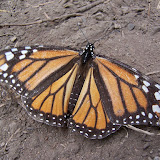
Prepare to be amazed. You may have heard of a place in Mexico where the Monarch Butterflies migrate to. It is about 3 hours from Mexico City (provided the traffic is running at it's normal pace.) After a hectic and some what chaotic drive to get there we all agreed that it was worth it. High up in the mountains the butterflies descend as the day warms up, first from the trees to the ground and then just lower down the mountain. While we were there the weather went from sunny and warm to cool and thundering so we saw the whole range of where they prefer to be. It was impressive how many there were ( even though the numbers are declining due to logging and destruction of their habitat.) The rumours we'd heard were true.... they do weigh down tree branches and there are so many that sometimes they get stepped on. Someone who has done extensive traveling described it as one of the most magical places in the world. Seeing is believing.


Monarch Butterfly Sanctuary

Homeward Bound and We Can Hardly Wait

Feb 12 to 14: Xalapa

. We just wandered around. We were glad to be out of the big city and into a smaller one. We enjoyed the view of the mountains from the park, found Jay's parents their first indoor market ( fish and leather included,) they experienced just how difficult it is to choose what you want at the bakery, found some treasures at Hippie alley, ate at an Italian resturant and found a great little park where you could watch the dog play on the roof.
. Again we had a sweet hotel. It was beautiful and had delicious breakfasts. Each morning we experimented and were never quite sure what we'd get.
. Our first ride to Jalcomulco by taxi ( what a luxury!)


Feb 15 to Feb 20: Jalcomulco

. We chose the right hotel for their stay here. immediately they were impressed with the courtyard. It has a toucan (in a cage,) some crazy banana plants that have awesome flowers, lots of greenery, a pool, and of course birds to watch and listen to. One afternoon they watched a hummingbird land and preen.
. We spent one day in Coatepec, which is known as the coffee capital of Mexico. They have a great zocalo that is meant for people watching. I bought more tiles there! We had churros (Mexican equivalent to a donut) which is deep fried pastry dough, rubbed in sugar.
We wanted to take them on the water using inflatable kayaks but the timing just didn't work out. Mom got a little sick.
. We did two hikes on different days. One was high up following a person wide path along the edge of the cliff. It follows the river ( so they could see some of the rapids we'd paddled.) A lof of the locals use it to get to their fields (mostly coffee.) It is dessert like with lots of cactus and geckos. The other was to a swimming hole that is at the mouth of a canyon. There are cliffs and mango groves to walk through. You get a great view of town.

As I write this they are flying the last leg of their journey. Despite dad curiousity about the weather and temperature back home, I'm guessing that it is a little bit of a shock to adjust to.

Family Time - Jay's Parent's Taste of Mexico

We were spoiled!! Jay's parents arrived Feb 7th and stayed for 2 weeks. It was our first time to Mexico City and we wanted to impress them. Time flew by, before we knew it we where sending them on their way back home. It was with great anticipation that we planned and schemed. But there were many surprises along the way. In time we realized that travelling with 4 people who have a limited time and a larger budget than we were used to has rewards and challenges of it's own. Dropping them off at the bus station, helped us realize that everyone's hard work was all worth it, as they were pretty comfortable with the idea of making their way back home on their own.

Feb 7/ Day One: Getting Started


. Getting to Mexico went smoothly on both parties behalf. Jay was super nervous about the masses of people at the airport but we didn't encounter them till later
. After a stimulating ride from the airport and with the parents getting their first taste of Mexican driving, we checked into our hotel. The Holiday Inn has a marvelous view of the zocalo from the roof top resturant where we dined on the lunch buffet (Mexican time, 2 till 5pm.) We squeaked in just in time at 6pm.
. The rooms are stylish and decadent with huge bathrooms. So many luxuries were enjoyed over the 3 nights that we stayed.
. Prior to settling in for the night we did a walk about to get a sense of the resturants and where would be a good place for breakfast. We also visited the huge Catedral Metropolitana - a massive church that has so many bits and pieces of history attached to it. It's in constant repair due to it's uneven descent into the soft ground. The arcitecture is a combination of styles and designs because it was constructed over so many different eras.


Feb 8/ Day Two: Touring Around the Zocalo

Templo de Mayor


. This crazy, well preserved mess of history is found right in the down town core. These ruins focus mainly on one temple that has had 7 different stages of construction, (1375 to 1502) each stage built on the previous structure making it bigger and hopefully better.
. It's hard to imagine what this place was like when it was first discovered. It makes one wonder why they built a city on an island that was surrounded by a large lake. The vision (an eagle sitting on a cactus eating a snake) the Aztecs saw must have be a powerful incentive to get building a city there.
. Many buildings here proudly bear the effects of earthquakes, time, weather and being built on sand or other sorts of soft ground.
. The museum houses artifacts found on site and enhanced what we saw outside.

. Our first trip to a grocery store where we bought an inhaler for dad (for $4.) It did wonders as the pollution here is horrendous
. We wandered down Madero street which is home to a cool house that's covered by tiles on the outside. (Casa de Azulejos)
. Also discovered a random historical art exhibit at the Palacio de Iturbide ( a government buildings of sorts)
. The Palacio de Bellas Artes is a concert and theatre hall. It has many famous murals and art work that depict parts of Mexico's history
. Park Alameda is named after the poplar trees that line the pathways. It's a breath of nature in the built up city. There are the usual food and souvenir vendors. Jay demonstrated his ability to bargain for his parents. They weres impressed and we return several times to find just the right gifts.
. Most of the evening there were drummers and dancers just across the street from our hotel. It seemed like a random event but the dancers were all insync.

Feb 9/ Day 3: Mexico City Tour
The Plaza of Three Cultures


. This amazing fusion of time and space combines pre-Hispanic culture, Spanish roots and modern dilemas. What you see is the ruins of an ancient Aztec site called s pyrmaid, the Spanish Templo de Santiago and the modern Foreign Affairs Building. The Aztecs were destroyed by the Spanish, who are the forefathers of modern Mexicans.
. The square that borders them was the death bed of many high school protestors in 1968.
. The high rise and apartment buildings that surround the area bear random dates and names that are a momento. They signify the hundreds who died due to collapsed apartment buildings in the 1985 earthquake.

More about the Square
. What started as occasional police intervention between students of 2 rival high schools steadily deteriorated as the police became more and more violent. The students felt oppressed by the police and in an attempt to stop the unjust treatment, they started protesting peacefully. On that fatal day (on the eve of the Mexico City Olympics) the leader realized that something was wrong as the students gathered at the square. He advised the students to leave peacefully. But before everyone could safely leave, government snippers on near by buildings (including the church) were given a go ahead sign by helicopter dropped flares to open fire. The disastorous mess was cleaned up immediately, so no traces were left. It was not mentioned in the morning papers. Despite a monument errected in 1993, the event is not mentioned in Mexican schoolbooks. It makes you wonder what sort of untold details about this exist.

Basilica de Guadalupe

. This is an amazing complex that has 7 different churches all for one saint. The area is massive and millions of very devoted people visit annually. On Dec. 12th(this saint's day,) it was estimated that 12 million people passed through this past year. A whole ritual surrounds this pilgrimage.
. In response to the Spanish impressions of the Virgin Mary it appears a Mexican twist occured. The indigenous people were not to keen on the Catholic influence the Spanish brought until in 1531 Juan Diego saw a vision of a woman who requested he build a church for her. No one believed him until she fulfilled his request for a sign. First there were a bouquet of roses in a specific spot in the desert. The roses tumbled from his cloak as he revealed the sign to the bishop. As he completed this an image of this saint appeared on his cloak. This was all the convincing the bishop needed.
. The original fabric image of "Our Lady of Quadalupe" can be seen at the most recently built basilica (1970) because the other building was too small and beginning to tilt forward. The churches are all built on the grounds where Juan Diego saw the visions. The image is above the main altar and can be viewed from 3 moving walkways. This building has a capacity for over 5000 people and 12 masses can be conducted simultaneously.

The Pulque Distillery

. Our last stop before the ruins was at a Pulque (a cheaper, less potent alcohol than tequila) distillery. They also made all sorts of expensive jewllery from onyx, silver and other precious stones. Mom and I had fun trying some on. It was great to see artisans at work using local, natural products.
. After 7 years of growing the maguey cactus is ready to be harvested. They cut away a few spikes to allow access to the core. Twice a day a large dried out squash with 2 holes in each end is used to suck out the juices. This is done for 2-3 months/plant. The juice is distilled and in the end you are left with a lovely foamy, milky, slightly sour alcohol. The branches ( or whatever you call them on a cactus) have very sharp tips that can be used as needles and the fibers as string. If you peel the fibers away you're left with a thin membrane that can be written on.

Teotihuacan - The Ruins

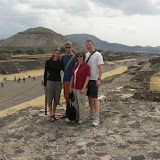
. This is known as one of the first great civilizations in central Mexico. It's largest pyramid is the third largest in the world. It was made of 3 million tons of stone, brick and rubble without the use of metal tools, pack animals or the wheel. The ancient grounds would have covered about 20sq km.
. It is estimated that 125 000 people lived here between 250 to 600 AD.
. The big pyramid is called the Pyramid of the Sun ( with the Moon Pyramid being the second largest on the complex.) It is 70m high, with a base of 200sq m and the total number of steps walked to the top were 248. A little steep at times, but certainly worth it for the view.
. The North South road is known as the "Avenue of the Dead" and lasts about 2km. The Aztecs believe that there are 9 stages of the after world.
. There were several palaces for the royalty, as well as houses for the artisans of the community. The buildings were covered with limestone and painted.
. With the most recent phase of reconstruction (I forget when) the designer felt it important to try to use original materials. There was not enough to be had, so they compromised. Small bits of original volcanic rock can be seen in the mortar between bigger rocks. On most buildings the small pebbles can be seen.

Feb 10/ Day 4: Anthropology Museum

. We were not disappointed to spend several hours in the "best museum in the world" (as Jay's grandparents say.) After we came to understand the lay out and came to grips with how huge it was, we agreed on what our priority items to see should be.
. It is divided into 11 main exhibits ( design by time periods or region.) The lower section has archeological finds, models of tombs, replicas, etc.. and the upper level depicts how modern civilizations now live. We visited the Teotihuacan, Mayan, and Gulf of Mexico exhibits during our 4 hours there.
. We hung out in the park nearby to eat our lunch. We enjoyed hearing about family, friends and life back home.
. Sundays are a great day to brave the metro system because they are not as busy. It cost $0.20 per person! The route system is by colours and each stop has a pictures, so there is no need to be literate to use the metro. Someone was thinking ahead.

. Feb 11/ Day 5: Tour to the Butterflies


Chronicle of Mom and Dad´s visit to Mexico

Monday, February 11, 2008

Holy Mole

More about food and eating... Hope you aren't hungry, because you might be after this!!!

Mole (Mo-l - ay is how you would say it phonetically) is a food that is reserved for fiestas. Molle is a paste that is create from various spices, chilies and cocoa or chcolate!! It sounds strange and it is. It doesn't taste bad, but it is unlike anything you have ever tried before. They make it into a sauce that is then used to marinate meat, usually chicken or turkey. You can make your own or buy it at the store or in markets. There are all sort of varieties that change depending on what is added to make it.

Tostados are one of my favourites. It sort of seems like it is a healthy choice, if they exist here in Mexico. Unless you make your own food I think it is safe to say that it is hard to get away from their deep frying ( finally some competition for all that dutch blood!) The base of a tostada is a crunchy toasted or deep fried tortilla. At our second host family they would take day old tortillas and microwave them. With all the moisture out they are crunchy goodness. The next layer is refried beans, which are the consistency of paste and taste yummy. Then toppings are added. In this area lettuce, tomatoes, advocado, pulled chicken and a crumbly cheese are placed on top. Sometimes for a final touch the tostado is garnished with crema ( a cream equivalent that comes in a small tetra pack.) So the trick with these is all in how you eat them. You can't use a fork and knife and invariably part way through the base tortilla is going to crack whether that is above a plate or not. Ask Jay - the first time that we had them with our host family he broke his with the first bite and it fell all over the table.

Ensalada would be the most healthy food choice in this area. You guessed it... salad, that is served on a plate. They only make it for gringos (white people.) It is lettuce, tomatoes and cucumbers. Lime juice is squeezed over it, rather than dressings. Because the water is poor quality the veggies are often washed with an iodine cleaning solution. The classy resturants will have that documented on their menus.

A taco is on of the most deceptive foods you will find on a menu ( if they have one.) Tacos are not the hard shelled, prepackaged, tasteless items you get back home. I use the word deceptive to describe them because I have had many tacos and they have all been different, primarily because the base is different. Sometimes the tortillas are deep fried, other times it is hot or cold. The tortilla is usually a little bit smaller, ~ 8-10cm across. Either way one or more ingredient is placed on top and you fold it in half to eat it. The most delicious ones here are chili spiced pork with cilantro sprinkled on top. You then add a little lime juice and salsa, and you are good to go. The toppings could include fruits, veggies or meat.

Tamales are steamed corn dough wrapped in a corn husk or dried banana leaf. The dough is usually stuffed with something: meat, veggies, beans, chilies or there is a dessert one filled with raisins and sweetened milk. The first time I had one it was disguisting. The texture was just too much. I have since tried more, they aren't my favourite but... The last one I had was stuffed with pork, a tomatoe based sauce and 2 types of olives.

Continueing on the corn ideas... A must eat in this area is the wheelbarrow corn. A wheelbarrow with wood and coals is pushed around town. When you are ready a cob is grilled and smothered with lemon juice, salt, mayo and chili pepper. It is then rammed onto a large stick. It tastes delicious. You can also get this combination in a cup ( with kernels of corn) or on boiled corn cob.
Enchiladas are tortillas dipped in a hot sauce, filled with goodies and then fried. After a collection of them are fried it's smothered in salsa or sour cream with cheese on top. Quesadillas are similar to home, except that they would be served with cheese predominantly. What makes quesadilas and burritos stick out is that they are made with flour tortillas ( which is why Jay likes them so much.) The cheese here is different than at home, ohh and they tend to drink milk warm ( haven't gotten used to that.) Unpasteurized milk from galvanized milk cans is available from vendors biking, driving or walking by. The two common cheese are Oaxacan and. Oaxacan is stringy and formed into big balls. It tastes similar to Mozerella but with more body. The other is crumbled and has a fairly strong taste.

Dessert isn't as big of a deal here. But they have a few substitutes. Flan and jello are big. Churros are a distinctly Mexican delight. The raw dough is squeezed through a pastry shaper such that it is about the size of quarter and 15cm long. It is then fried and rub in sugar. They also deep fry bananas and top them with sprinkles, jam, chocolate or carmel sauce, sweetened condensed milk or cream. If it is a hot day you can get sherbert or fruit popsicles. They are made by hand with real fruit juices and chunks. A few of our favourites include; lime, pineapple and coconut. So delicious.

Sunday, February 10, 2008

Street Grunting Anyone?

Street Grunting... This term is not an original of mine. I got the idea out of the book "People's Guide to Mexico," which is an anecdotal introduction to Mexico. As they say, "Street grunting covers everything that doesn't have to be eaten while sitting at a table...It is an entire system that eliminates much of the hassle and time involved with ordering, menus, tips, and other restaurant rituals." It is a great way to eat out. It is cheap (usually you couldn't make it at home for the prices they charge.) We usually wander the streets or sit in the zocalo with our finds.

Now would be a great time to introduce the idea of streets vendors. After dark the streets are transformed. People drink beer in groups outside their homes. Plastic Sol tables and chairs are placed on the roads ( cars rarely drive on them anyways - at least here in Jalcomulco) and a large propane tank is attached to a variety of strange stoves. Temporary resturants appear each night. Those families that sell out of the main square (rather than their homes) often have a special bike or covered hot dog like stands. These people sell pretty much any sort of snacking food: hotdogs (fully loaded), hamburgers, tacos, empandas, corn, sweets, nuts, drinks, fruit, popcorn, pork rind chips, sherbert, potatoe fries, deep fried bananas and pastries. There are also people who wander or bike around town at various times of the day selling cheese, chicken (it's raw and not refrigerated), yogurt, and breads and sweets from the local bakery. They often have a large basket that is carried on their head. Jason has this theory that if you stay in the main square with a decent amount of money and enough time and patience you can get anything you want without even having to leave your bench...foods, drinks, souvenirs, tour bookings, bar/resturant recommendations and of course Spanish practice.

Since they sell things on an as needed basis people don't have menus. The more permanent places have signs or posters that show or have written what is offered. Other places you just have to guess or point to your neighbours and say I'll have one of those. Mexicans are known for not always have everything that would be describe on a menu. So it is better off sometimes to ask them what they do have.

Our favourite food place to visit is the panaderias or pasteleria. Pan is bread.... so it is a bakery and pastel is cake .... which refers more to pastries. Either way as you enter in you are greeted with delicious smells. In Jalcomulco the bakery prepares its' goodies for the afternoon, oddly enough 4 o'clock is the best time as they prepare only enough for that day or two. To purchase anything you grab a tray and a pair of tongs and select as much as you think is healthy. Let me tell you that margin has increased dramatically for us. Typically each item (cookies, a bun, muffins) is $0.10 to $0.30, a loaf of bread is $0.60. In San Cristobal you could get a slice of cake or pie for $1.50. Here things are more basic.

One of my most favourite food experinces happened in San Cristobal. We were watching a mariachi band in the park. It was beginning to get cold. We passed by a table that was lined with large drinking glasses. Each one had a spoon inside. The lady behind the table promptly asked us if we'd like ponche. After adding a few layers of clothes we got the hot drink. Jay got pineapple, which had sweet bread crumbled into it. Mine was a mixture with big chunks of fruit in it. You could get it for here or to go, hence all the cups. They just give 'em a rinse and then it is someone else's turn. What a great idea. The other event around here is going to Juan's. He's a local, who with his family prepares empanadas, tostadas and tacos out of their front room or on the street. We often go and hang out there as a big group. If he doesn't have any beer in the cooler you just walk down the street and buy your own.

Wednesday, February 6, 2008

Beans and Rice and Limes and Salsa

I love to eat and thankfully neither of us has had any major intestinal problems. So I thought it would only be fair to include some explanations of what Mexican food is really like. Sorry for all of you out there that like Mexican food back home, you may be disappointed with some of my descriptions as it's so much different here. Part of the reason may be the amount of work and time that go into preparing the traditional dishes. Another random tidbit of information worth mentioning is that the food is spicy only once a salsa is added. Most of the time you as the person consuming it are the one who determines what kind of salsa is added and how much. I'll also include a story about learning to make Empanadas ( a deep fried Mexican pizza pocket.)

Corn tortillas, along with beans and rice are staples. Despite a few common ingredients many dishes and styles of cooking change depending on the area that you visit, add a few extra chilies here and throw in a different ingredient there. Corn tortillas are one of the most versatile of foods, though it also is one of the strangest tasting foods. For foreigners it often takes time to get used to the taste and texture. Now what you gotta remember is that these suckers are not the flour jobbies that we get in Canada. The round, cooked corn cakes are varying sizes, but most commonly they are about 15cm in diameter. The best ones are those that are homemade, though that is a bit deceiving as there are ways to "cheat" on that process. In the past you had to start by soaking corn in lime juice and then grinding it into a paste. This formed a dough that was rolled into a little ball about the size of a two year olds' fist. You'd then hear the rhythmic tap tap as the dough is flattened with the palm of your hand. I tried it once with our host mom but a chunk of dough ended up on my hand, leaving a hole in the tortilla. It is then cooked on a earthenware or metal griddle.

The modern variations of creating a tortilla are many. Now a days they have tortillerias ( anything with "eria" means a shop or factory) that pumps out fresh tortillas. They smell delicious as you pass by the stores at meal times, lined with women and their covered baskets (people bring their own containers and they stay soft when warm and wrapped.) These same stores also sell the corn already ground. You can purchase the flour and mix with a little water at home, whenever you are ready to make them. My favourite is when the dough already made for you. The ladies show up with a sandbox toy pail and they get it filled up with the dough, which they then roll out and cook as needed. So if that is not enough options there is still one other exciting option, because you could always go to the store and get them. That is the delivery guy. You have to listen carefully for the guy driving around with a cooler on the back of his scooter/motorcycle. He makes his way all through Jalcomulco touting his horn as he passes by homes. You go out to your front door, pay him a little money and you get tortillas. Another convenience for tortilla making is the metal or wooden press used to flatten the dough into a nice circular, flat tortilla. Tortillas don't keep well so the fresher the better.

Typically Mexicans eat the main course with their hands, spoons are over rated and used for serving and salsas.. The tortilla is ripped into smaller bits and used as a scoop to shovel things into your mouth. You can use your hands to rip apart meats. It took me a while to realize that when we sat down with our host families we were given utensils, but they went with out. At first I would use a tortilla like I did in Canada, meaning that I would stuff it with whatever, roll it up and then eat it. Mexicans do that but it is less common.

So seeing as this has taken me so long I'm going to divide this up a little for easier reading. I hope that you are ready for a novel. We were able to use a friend's computer so I took advantage of that and made time to write out all my random thoughts.

The empanada story needs to be a part of this. One of the food things that is still a little unclear is how they use the tortilla to make so many other things or do they?!? The ingredients are changed and different flours are used. They are made into different sizes and some are deep fried while others are just heated. The mystery for me is how they know when to use which one. The pictures of empanada making will certainly help with your understanding of the process and help you to visualize the press.

To make our dough we added corn flour and wheat flour together using a ratio of 3:1. Then water is added in increments as the dough is kneaded. It tends to be on the sticky side. A small dollop of dough is placed between two pieces of plastic ( almost like a tough grocery bag) on the press. You squeeze it till it is round and about 2-3 mm thick. Next remove the top piece of plastic and add the filling on half of the tortilla. In this case our filing was ground pork. Other filings have included: cheese, chicken, mashed potatoes, chili spiced ground meat or any combo. I kept adding too much filling to the dismay of our host mom. You then fold the top half of the tortilla over the filling and squeeze together the edges (it is much easier if you place the plastic back over top.) From there you added a bunch of them to bubbling, warm oil. It gets turned occasionally as it browns. They are best eaten at an outdoor vendor as soon as they are cooled enough you won't burn yourself. Since I added so much filling there wasn't enough air trapped inside and it became hard ( all this from an expert, we didn't really notice.) In San Cristobal they are served with cabbage and mayo drizzled ( dredged) over top.

Empanadas anyone? They are one of Jay's favourites.


Friday, February 1, 2008

Palenque

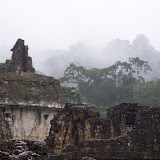
Palenque is one of the coolest ruins that we have been to so far. It was so well done by the Mayan people as it was built that you don't have to use your imagination too much. The pictures will speak well for themselves.

The highlight of this place was how it met and exceeded our expectations. We arrived to pouring rain. Now this might make you envious (oops :o) but since arriving In Mexico we've had one rain storm that we can remember. The rain lasted less than one hour and that was over two months ago. So our plan of sleeping in the jungle in hammocks was less appealing.
Instead we got a little cabana. The rain continued for two days, but that the only things that impacted was not being able to hear howler monkeys or see much wildlife. And I am still a little disappointed about that. Seeing the ruins in the rain means way less people and a more mysterious aura.

The first night we stayed there I got sick. It started with tummy cramps and in the end I was left with a cold, some where in between there was a fever. Jay took really good care of me. I was waking up every hour or two and it turned out that so was he, though normally Jay sleeps through that. Him being there to reassure me made it much more bearable.

Palenque

Market Days In San Cristobal

Okay now that you all have a better understanding of what San Cristobal is like I'll let you in on more of the artsy, fun things that we were able to do. I'll highlight two more things. The first is the markets and the second is a play/dance/musical that we went to. Jay worked hard on the pictures and hopefully you get a sense of the sights, you are still missing the smells and sounds, but that will be left up to your imagination!. No cameras allowed at the production.

The market is a thriving business opportunity for many families. They are bustling with people buying and selling all sorts of weird and wonderful things. Some of the markets are temporary, setting up on certain days of the week, while others are permanent. In S.C. there were two main ones that we frequented because they were with in walking distance. It sounded as though there were at least 2 to 5 more that were further away. Both of these markets were permanent, thought that meant two very different things. The sweets market (ohh soo good because it is deliciously fresh and hand made) was a covered building, in which people had designated stall areas. This market had restaurants around the perimeter and also sold textiles, jewelry, and some wooden trinkets. The other market was an artisan market selling similar products as the first (minus the sweets) but on a much larger scale with a lot more variety. It was outdoors. Each person had tables and hangers with a sort of over head covering made out of wood and sticks. At the end of each day ( and they had access to electricity, so their days where long, till 7 or 8pm) they would pack all their goods up and cart them home, unpacking them again the next morning. It seems like an exercise in patience!

The traditional Mexican shopping experience is to buy enough food till the next market day. For example in Jalcomulco there is a fruit and veggie market Tuesdays and Saturdays. Friday is when the clothes, music/DVDs and other random household vendors set up. People buy whatever is available on that day, even when the quality would be questionable by our standards. If they run out or miscalculate they take a trip to the corner store, which has a little bit of everything. You might have to ask for a specific product or a more fresh item as they hide all sorts of things in fridges or in a back room. From our house there are 2 stores with in 1 block and 8 with in 5 blocks. The prices are comparable to the markets. The best times to visit a market is from 9am to 1pm.

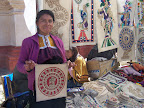
The artisan market is a treat to one's eyes! The colours and patterns of clothing and art are as lively and bright as the people that sell them. The women are the ones that come in from the surrounding villages, walking 20 minutes to an hour. I'd be curious to know what the men do, but I assume that they farm and prepare the clothes and art. The women bring their children, who often try to help or play near by. It wasn't uncommon to see a mom breast-feeding. The smaller children were slung over their mom's shoulders or backs using a shawl. Often you'd see little feet poking out the bottom. Some people were aggressively
seeking you out ( though that was more common in the streets, away from the market), while most worked on projects as they waited for you to make up your mind. One of the bonuses for us is that their wares are inexpensive compared to what you'd pay at home. The price that they quoted left little room for bargaining, though we tried. This seemed unusual. The women come prepared with food and water for the day, thought there is stalls around that sell food.

One evening we came upon a road that was pulsing with activity. It was a pedestrian only area. There was a little guy bellowing out a tune, while others set up displays of jewelry. The street was lined with cafes, bars, restaurants and shops. From our discovery day forward we just referred to it as Sparks Street. As we continued further on we were bombarded by folks who invited us to this production that we had seen advertised around town. We thought it looked good but in our general fashion we couldn't make up our minds. What about the cost? Did we really want to go? What else did we have to do? After a block of bantering we decided to go for it. Our timing was perfect as we got the last upper section (cheap) seats. What we discovered when we got inside the theatre was that it didn't matter. The place had maybe 20 rows and they used the aisle as part of the show, so actors were coming and going right beside us. Either way the price of the ticket was certainly worth it.

The show was called Palenque Rojo. Palenque is a town that is about 5 hours bus ride away. It takes quite awhile to get there as you have to go through the mountains. Now it is the site of a major Mayan ruin. Following is a direct excerpt from the brochure; " In the extraordinary lands of the Mayan, embraced on all sids by the jungle, with its exoticism. wild beasts and magic, there was an age which gave rise to two great city states: Palenque and Toninia. These two cities fought to control the commercial route from the Gulf of Mexico to the heart of the mainland. Here we present one of the most important moments of this power struggle: the kidnapping of the ruler..."

The presentation was well done, from live music to their costumes to the choreography. It is impossible to describe fully. The highlights were the animal costumes and watching how they moved about ( like the crocodile for example.) The way that the king and his assistants were dressed was also impressive, particularly the masks worn for battle. At one point in the fight against good and evil a large skeleton appeared. It must have been about 20' tall and as it got closer to the front of the stage you realized that it was actually being moved by a person inside the costume. It was easy enough to follow even when they spoke some indigenous dialect.

Here are the pictures. You may have already seen then, but they empasize what I described.