Friday, August 15, 2008

The Amazonian Birds and Animals List

For those of you who are super excited about what we saw you should check out the following spreadsheet. The lodge provided a list of the creatures that they regularly spot. Jay took time each day to update it. So here is our editted list. We kept the original sheets with an even more in depth collection of names. Hope that this helps for all you hard core animal fans out there.

http://spreadsheets.google.com/ccc?key=p0NbKymVqCceU2ojkQIdHSg&hl=en

Crazy that we have this great technology available. Jay thought that this type of document could happen and I was the one who played around to make it work :0)

Wednesday, August 13, 2008

Iquitos

Strange is the best way to describe this place. In all of our travels we have not yet encountred a place where we have been harassed by locals to join their tour as much as we were here. Thankfully in time they left us alone and we met people who were more genuinely concerned about us having a great stay in the place that we called home.

The funniest story would have to be our moto-taxi driver. The airport is small and very simple. When you exit the building after getting off your flight you are immediately swarmed by the usual mob of taxi drivers. Since the only way to get supplies to this city is by boat or plane people tend not to have cars but 3 wheeled moto taxis. The was a group of them that were regulatd so we got into the one that was waitign at the front of the line. Our choice was made easier by the fixed rate. It takes 20 minutes to get into down town. We made it maybe a 1/2 a kilometer before our driver pulled over to show us the tour company that he recommended. Since unemployment is rampant people try to get a little comission where they can. He drove slowly the rest ofthe way to our hostel trying to convince us to buy this or that. It didn`t work but he was persistent. Later that evening when we went for dinner and again the next morning he was waiting outside the hostel, preying on you as you tried to sneak out the door. We decided to call him Shadow as he was always around it seemed. We didn`t see much of him again until our ride back to the airport. We passed him while we were in another moto taxi. He waved at us! We couldn`t believe it.

The city has many unusual things to offer. From a building that was made by the same guy who built the Eifel Tower to a church with a clock built in Sweden to old mainsons decorated with hand made tiles sent from Europe during the rubber boom in the early 1900s. But what we liked best was the Belen Floating market. It was the dry season when we were there but when it rains several thousand houses begin to float. Surrondignthis area is a hure market. It offers everything you could imagine and more. We saw some geat things and soem awful things ( turtles which are illegal to sell.) We me a guy who guided us around and taught us abuot local traditions. It was super great.

Iquitos
City - No Road Access!

Tuesday, August 12, 2008

Day by Day Snap Shots of Our Amazon Trip - Warning This Is Epic!!

Excursion 1- The Jungle Walk
Day 1- Afternoon

We got to the lodge by boat. We took a small pit stop at a local community, a booming metropolis as far as the jungle communities are concerned, with a population of 4 000! After a yummy lunch we got geared up in our long sleeves, bug spray and rubber boots ( yeap it was quite the get up thanks to our guide for the boots) and we headed off on a 2.5hr walk through the jungle.

It wasn`t too much different than the jungle walks we`d done in Belize, Guatemala and Ecuador ( does that make us seasoned travellers?) - except that things in the Amazon are bigger and more intense. For example the plants are more spiny and the insects larger. Thankfully the mosquitoes weren`t as bad as we had psyched ourselves up for.

We saw:

  • a leaf cutter ant colony which took up as much space as our cabin and was 3" or 4" high in places.
  • leaf cutter soldier ants are huge, and have scissor-like jaws that can cut human skin
  • pygmy marmoset monkey that was quick and agile as he jumped about in the trees - the adults are the size of a hamster
  • 2 types of tranchulas, one had pink feet, but that didn`t make it look any less intimidating
  • a bullet ant whose bites are at least as painful as a wasp sting . They are one of the biggest ants in the world, the one we saw was about 3 cm long!

Excursion 2 - Our First Night Boat Ride (Day 1 - Night Time)
With supper in our bellies 2 groups loaded into an open boat. Our guide was at the front with a gigantic flashlight run off a car battery- making it only marginally less bright than the sun. Our aim was to see what we could along the river banks. Jay was hoping for a Caiman, but no luck.

We did see:

  • bats the size of Blue Jays darting here and there over the river
  • 3 Toed Sloth ( rare for this time of year)
  • 2 different types of tree frogs ( they are so funny to see clinging to branches)
  • 1 polka dotted tree frog, beautifully coloured red and green. We found him on a lily pad.
Stealthily gliding along the water at night is indescribable. You hear the noises of animals you can`t see and know that they are watching you. The calls of birds, insects and frogs were incredible to hear. It is unlike any other place we`ve been. Being a part of everything that is so alive and sounds musical in the darkness creates a a really special experience.

Excursion 3 Bird Watching
(Day 2, Before Breakfast)
Up and at 'em at 6am and leaving at 6:20, we took the boat along the same route we did yesterday but now we were specifically on the look out for birds.

We saw some amazing birds really close by, our favourites being:

  • a couple different types of herons
  • multiple types of king fishers
  • several hawks
  • a goofy looking wading bird with yellow under its` wings and such long toes it can walk on the water lilies without sinking through

It was really pleasant and relaxing time. The air temperature was still nice and cool and it is a pretty plush way to bird watch. All you have to do is get up and sit right down in a a boat. It did give us a better appreciation for how amazing a bird watching location Mindo, Ecuador was, how world class a guide Marcelo is and just how much those excessively early mornings and long walks were worth it. We´re really glad we don`t have to be up at 4:30 here!!

We had fun observing a bunch of squirrel monkeys. As well as 10 or 12 bats sleeping on a tree trunk. They were so camouflaged they were hard to see even when staring right at them. It is impressive to see how good an eye our guide has for the animals.

Excursion 4 - Fishing for PiraƱas

( Day 2 - After Breakfast)
We slathered on the sunscreen, got out our hats and looked forward to encountering the infamous piranha! It wasn`t quite what we expected... better though.

This was Jay`s kind of fishing: a bit of fishing line with a hook, hung off a 5" long stick. Simple but it did the trick. Bait the hook with cubes of chicken innards and then drop it in the water. The fish nibble until they get all of the meat or you get lucky and hook one.

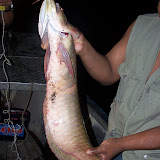
By the end of a couple hours we had managed to each catch a few. They were a mix of fresh water Sardines, Red Bellied Piranhas and Amazon Pike. The piranhas vary in size but our little guys were about as big as Sunfish. I expected they be bigger but they do look pretty fierce with there sharp, pointy teeth.

We found it relaxing, especially since I didn`t have to take my fish off the hook. It turns out this was probably the most low, key event. There was just 4 of us in our group. Karin, who was one of the two German ladies in our group was afraid of catching fish and oddly enough she caught the first 2! After that she just sat and watched us.

For lunch they cooked up the 4 biggest ones (which were still small) for us to eat. They were pretty skinny and full of bones. But they were quite tasty. Even though the piranhas were small their teeth are fiercely sharp and they bite hard on anything they can get in their mouth. Who knew that of the 25 types of Piranhas these are 1 of the 3 that are carnivorous?!?

Excursion 5 Watching Pink Dolphins and Swimming in the Amazon River

(Day 2 - After Lunch)
Now for the moment I`d been waiting for, ever since I´d heard about the existence of the unique pink river dolphin!

We didn`t bring the camera because it looked like rain and had heard the dolphins were almost impossible to photograph anyways. We missed not having it. Jay was also sad he`d worn his sandals because some flies found his feet to munch on. He grumpily hunted the flies with our 95% Deet bug spray. I`m not sure if it killed any but it made him feel better.

To get to Amazon we needed to motor boat down the Yanayacu River which is the river the lodge is on. It took us about 10 or 15 minutes. We got to the confluence of the two rivers and it didn`t take long to spot our first dolphin. They are a beautiful light pink colour with splotches of blue-grey. They didn`t jump out of the water so we had to content ourselves with spotting their backs as they came up for air. Jay was lucky enough to see the entire back, head and a narrow snout of one of them. It was really phenomenal to be able to see such a different animal that is found no where else in the world!

We were hoping that when we jumped into the water they would want to come and play with us. I think we scared them away! We swam around in the dirt coloured water. It carries along with it all the silt and minerals it washes away. It is clean but really murky coloured. So you can`t see a thing. It is a little strange at first not being able to see yourself. It was a thrill to be able to swim in the largest river in the world. Even here, so near the beginning of the river it is as wide as any Canadian river I`ve ever seen (including the Rupert.) Apparently at its' mouth it is 300km across!!!

Seeing the pink dolphins and swimming in a river with such a powerful reputation made for a real highlight afternoon.

Excursion 6 Night Boat Ride/ Searching For Cayman

(Day 2 After Supper)
This afternoon a pretty large group arrived, so two boats went out for the night excursion. The super bright flash light went in the other boat and we ended up in the back of the boat where it is hard to hear and see what was being pointed to. We were worried this would be a real bust because we`d miss something.

We were pleasantly surprised when shortly into our ride we spotted a opossum, which was a rare and cool sight. It has a really long tail. After that we didn`t see much, partly because of the low light flashlight situation. About the time we were beginning to feel like this trip was going to be pretty lame things started to get exciting.

We headed through a little inlet into a swampy lake. One of the guides jumped out on the muddy shore barefoot and wandered off towards some grasses and tall plants. When he came back he had a 2¨ long White Cayman in his hands! Cayman are a species of alligator found in the Amazon. It was amazing to be able to get such a close look at one. We even got to touch it! A few minutes after releasing that little guy back into the water our boat beelined it straight into another group of weeds with a guide hanging over the edge. Before we knew it he came up with another type but similarly sized Cayman. This time it was a Black Cayman !!! The guides are so great at spotting its`glowing eyes. These critters can grow up to be 6m long.

A little more floating around with the light on brought our last surprise for the night. We were all set to head back but as it turns out were weren`t done after all. We`d settled back into our spots when before we knew it there was this flopping and loud thumping, accompanies by some commotion. We realized it was an ugly, pre-historic looking Monkey Fish (because of the way it looks )who`d been attracted to the light. He jumped into our boat and all 3" of it was thrashing around! There are always fish jumping, especially at night. Jay had a couple smaller sardines actually jump into the boat and land on him. He was as caught off guard as we were and made his way towards the back of the boat. Our guide had to step on him before stunning him. It was then that the boat driver told us this kind of fish had broken his cousins rib doing the same thing! We took it back with us and it was incorporated into Spanish Omeletes at lunch the next day.

We also saw a very poisonous coral snake in the water. After all that I was glad we`d done our swimming earlier that day. I guess I shouldn't be such a wuss as the locals bathe on the river edges and it is where they get their water from.

Excursion 7 Morning Bird Watching Again

(Day 3 Before Breakfast)
Today we went up stream, past the little village of San Juan. Most of our excursions had been downstream of the lodge so this was a great change of scenery.

Our most dramatic sighting of the day was a sloth outlined against the sky up in one of the trees. It was difficult and took lots of patience on Rafael`s (our guide) part. There were lots of beautiful water birds we had seen before. It was really enjoyable to take our time watching these birds as we`d seen them in passing at other times. Jay was particularly fascinated by the King Fishers. As it turns out there are 5 species in this area. Over the 4 days we saw all 5!

Our favourites we saw this morning:

  • Striated Heron - a duck sized heron that is striped and spotted
  • White Throated Heron - similar to the Canadian great blue heron
  • Great Common Egret - a beautiful pure white bird with a yellow beak and black legs

Excursion 8 Searching for Monkeys

(Day 3 After Breakfast)
It was time for walking so we wore our rubber boots and long sleeves with a little bugs spray added into the mix. We were ready.

First we took a Peke-Peke ride. This is a lower riding wooden boat common to jungle people. It has an unusual looking out board motor. The propeller is on a long shaft enabling the driver to easily bring the prop. very close to water surface in the shallow rivers. Then we switched to walking. However the area we walked is travelled by canoe in the rainy season!

Along the way we heard Capuchin monkeys off in the distance, and closer to us was the loud and bizarre call of the Horned Screamer ( a huge goose-like bird we`d seen yesterday.) We saw ´Cannon Ball Fruit´a round baseball size fruit with a fermented smelling fruit inside that is toxic to people but gives monkeys a little buzz when they eat. They have to crack it open by hitting it against a tree branch. They are the only type of monkey that is smart enough to have figured that out.

Eventually we reached a tall tree standing a little on its` own. In a cleft about 15m up there were 3 "Noisy Night Monkeys" cuddled together and watching us. It was a family with a little baby! Their wide owl like eyes made them particularly cute and definitely worth the walk to see .

Excursion 9 Quest for the Victoria Reina (Giant Lily Pads)

(Day 3 After Lunch)
We hoped our afternoon spotting would be less elusive than monkeys and birds. It doesn`t really move or fly away. Ever since getting to Iquitos (the main jungle city/port) the jungle trip sales guys have been telling us of these huge lily pads. We were quite excited to see them.

We took our Peke-Peke boat downstream for a short distance (thought it still takes awhile to get there as it is slow moving.) We scurried up the bank and started walking as Rafael and the boat driver pried the motor off the boat. After a hop, a skip and a jump we´d made it to another lake/swamp where a boat is left. We had to get to the other end which proved to be a little work. The water level is low so we needed the motor to help power us through the floating vegetation. Paddling would get us no where.

There isn`t a specific trail. The open spaces you might see at pond back home are constantly changing as the plants get blown about. Their roots don`t attach to the bottom so the winds moves them where they will. Each time the guides come here they need to find or make a new way across the lake. That meant Jay needed to help them "paddle" or pry our way through a 10m barrier of floating plants, helped occasionally by the motor when it wasn`t cutting out because of the clogged weeds.

We did make it and the lily pads were huge! 1 to 2m across. 1cm spikes could be found as protection on their stems and undersides. They live for about 3 to 4 months. A beetle that they trap prior to closing at night pollinates for them when the beetles are released as the flowers open again in the morning. How very impressive. Rafael just laughed when Jay told him our ¨big¨ lily pads at home are no bigger than his ball cap.
The motor was cutting out a lot on the way back so we were a bit concerned about the upstream ride back to the lodge. It recovered nicely once we were out of the swamp.

The swamp had a beautiful remote feeling to it. There were all sorts of birds. The new ones we saw were the dark Tiger Heron (very appropriately named) and the prehistoric looking Hoatzin. One last parting adventure was seeing a very poisonous Fer-de-lance snake on the river bank as we left. On our way there we`d seen a large green iguana in a tree alongside the river.

Excursion 10 Jungle Night Walk

(Day 3 After Supper)
Everybody in our group was pretty tired, but none of us wanted to waste any jungle experience opportunities. We all said we`d like to go walking when Rafael suggested a short night hike.

We saw some pretty cool insects. A huge leech, Wolf Spider, a super poisonous coral snake and a tailless scorpion (who has no poison but looks quite ugly.) most exciting thing was a big, black tarantula which got spooked away before we could get pictures. I think everyone was a little disappointed. Rafael was trying to prompt him to move so he`d be more photogenic. He wasn`t interested and just left. Oops.

All in all the walk was a let down. We weren`t too sad about it because we were all so tired. It is an eerie feeling walking in the jungle at night, knowing there are so many spiky, poisonous and foreign plants, animals and insects there. Plus it is dark....Is it ever dark!

Excursion 11 The Grand Finale: Morning Bird Watching

( Day 4 Before Breakfast)
It was time for our last early morning boat ride to see what we could see. This had become a very pleasant routine... up get dressed, brush our teeth, walk to the dining room, make hot chocolate, wander to the boat and slowly wake up while floating down the jungle river, watching the vibrant life all around. Today we saw many of the birds that had made regular appearances on our boat rides. Various king fishers, hawks, vultures, herons,small wading birds perched near the river banks and the constantly jumping little fish.

In addition to these, we had the extra treat of finding 8 to 10 long nosed bats roosting on the underside of a tree over hanging the river. We watched as a number of Squirrel Monkeys woke up and started jumping around in the trees at the side of the river. With Rafael`s binoculars we were able to see the wildlife really well.


Action in
the Amazon

Sunday, August 10, 2008

The Wonder of the Amazon - It`s People

Excursion 12: Visiting the Jungle Village of San Juan de Yanayacu
(Day 4 After Breakfast)

The "village visit" is one of those must see items on the itinerary of all the local jungle trips. We weren`t sure how to take it after hearing stories of high pressure sales of souvenirs, displaying captive jungle animals for money and in general just putting on an act and dressing up in traditional ritual clothes to dance around, fulfilling the tourists wild imagination of jungle life. None of this sounds like positive tourism and we weren`t interested in contributing to it.

But, this was another area in which Muyuna Lodge did things differently, in a way that is more healthy for everyone involved. They refuse to go somewhere with captured animals. They encourage people to go about their daily life when tourists are about and display their handicrafts clearly but without high pressure sales pitches. Rafael knew most of the villagers. Almost all of the staff at the lodge and their guides are from this village. Doing our visit in the context of such an ethical and healthy relationships between the lodge and the village people made it a real treat.

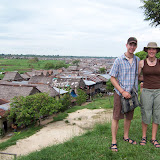
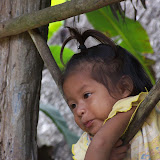
We took is easy and went at a leisurely pace. People went about doing their daily tasks, with a smile and a friendly greeting. The kids were curious and some were brave enough to chat and get their picture taken. The Spanish accent here is quite a bit different, but we could do the basics. People were really patient with photos. Rafael took time to chat, tell a joke and laugh with each person we encountered. This enabled us to really see how people live now, instead of them trying to meet some kind of imagined expectation of the exotic Amazon village!

All the houses had thatch palm leaf rooves, plus they were on stilts to keep them dry in the rainy season. The most basic home is a single, wall-less platform where at night time people put up a mosquito net to sleep under, the whole family tucked together in a row. In the dry season they cook over an open fire under the house, where you`ll see the free range chickens. The more fancy homes had walls covered with mosquito netting, a water tank, and more than one room for different activities (cooking, sleeping and a family room.) The planks that they use to build their houses from are cut by chain saw. They are really good at it. We also saw somebody preserving fish by salting and laying it on a piece of tin to dry it. This is the mainstay of people`s diet and income here. It is mostly fish here. They will trade them with people down stream when they need something they have on offer. There are a few small banana and corn plantations.

A few other random thoughts about the visit:

  • The basic diet here consists of fish with either corn, bananas, yucca, or bread fruit.
    There are about 150 people here, 60% of them are children
    People rarely complete the 6 years of elementary school because of work and family life
    Women often marry early, at 14 or 15 years old. With child bearing coming quickly after.
    The village boasts a small church, elementary school and a bar/restaurant.
    Things are very communal. When the school needs fixing everyone pitches in with $, time and equipment.
    Having 5 children by the time a women is 22 or 23 is not uncommon
    The water is drank straight from the river without being filtered or boiled. Child are most likely to get sick, everyone else has already adjusted.
    The shaman is the expert in medicinal plants of the jungle (knows over 150 types.) The midwife helps the pregnant girls during their pregnancy, labour and with post natal care.


Our Visit
to San Juan de Yanayacu

Tuesday, July 29, 2008

Cordillera Blanca: The White, Snow Peaked Mountains of Peru

Cordillera Blanca translates directly to 'The White Range' and is names for the huge number of impressive snow capped peaks that are packed into such a small section of the Andes. There are 27 peaks over 6000m here! This is the highest collection of peaks in the Americas, and is second only to the Himalayas in the entire world. Needless to say the landscape is stunningly beautiful here, and that it attracts hikers and alpine climbers from all over the world.

In the midst of this is the city of Huaraz. A strange, haphazard town where the adventure vibe is contagious and there are tour companies (of varying repute) on every corner trying to sell trips to anywhere. As a town, it isn't all that much to look at. A recent (1970) massive earthquake left only about 10% of the city standing with a death toll of about 30 000 people. It is only in the past 20 years that tourism has taken off. In the past people were typically just barely holding on through subsistance farming. With little money and infrastructure this town has not fully recovered. Prior to the earthquake most homes were made of adobe (clay bricks made with straw) but afterwards, if people could afford them, more modern materials were used. Huaraz is a real mix of rich and poor, clean and dirt, old and older, modern and ancient.

The close mountain ranges are what draws people. The Corderillas Blanca is about 20 km wide and 180km long. The Corderilla Negra on the opposite side is smaller and has no snow peaks. Gristly gray ridges and sheers rocky cliff faces beckon hard core climbers. Snowy peaks and iridescent glacier summits beg to be explored by those who can handle the elements. Turquoise lakes found among mountains peaks, hilly, grassy plains, bright coloured wild flowers and deep valleys surprise hikers as they round the corner. You feel small as you stand by any of the 50 peaks that are over 5700m!

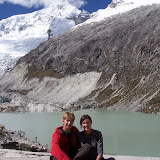
So how did we take this all in? As usual we came with a very loose plan but it came together as we got advice from various local sources. It took the first few days to adjust to the altitude but we didn´t let that stop us. To celebrate our anniversary we went to a mountain lodge where we did 2 hikes and then joined a tour group of 4 ladies - all over 60 years old. We encouraged them as they slowly made their way through a valley to a glacier lake at around 4400 above sea level, with noticably less oxygen. In turn they were witty and had amazing stories to share with us. A few days after this we spent 4 days and 3 nights on a guided trek with a group of 3 other tourists and just yesterday we went horse back riding in the Corderilla Negra.

Now, for our time at the lodge... though the lodge is only about an hour drive from Hauraz ( over rough roads - yeap we got a flat tire on the way back) there was no electricity there. Our bed had a huge duvet blanket (haven`t had one since we left home - what a luxury) so we stayed warm at nights. From about 6 to 10pm a generator was turned on allowing the cooks to see what they were doing as they prepared our fabulous 3 course dinner. The electricity thing did mean having to shower by candle light after we got back from hiking - but that just added to the beautifully rustic atmosphere. The view through our bedroom window was fantastic!

The first day we hiked through two local villages (Llupa and Pitec) and it was like stepping back in time. Regularly you could see woman shepherding their cows, sheep and pigs. Donkeys were used to harvest wheat. Families live in small stone or mud-brick huts. It feels really remote. The second day we planned to hike up to a lake (Laguna Churup) but quickly realized our bodies were not up for the challenge. We went part of the way up to over look a deep canyon and spent an hour there enjoying the view and our lunch before heading home. The third day was our last, so we had to find a way back into town. At about 10am the hiking group of old ladies arrived and as a spontaneous decision we joined them for the day instead of hitching a ride back to town. We didn´t really know where they were going but the views of the valley and ultimately Laguna Llaca made it all worth while. As an added bonous, their van drivers were heading back to Huaraz after dropping the back off at the lodge once they were done hiking, so we got an easy ride back into town after all!

Several days later we also had the opportunity to go horse back riding in the Cordillera Negra. This was 5 hours of amazing sights that we mostly enjoyed... though as I sit here and write this my butt is still somewhat tender. Our guide was an 11 year old who seemed more at home on a horse than on his own two feet and despite his young age was more than competent enough to take a couple rookie gringos through the areas where he has spent his whole life. We could see over the valley to the Cordillera Blanca's snow capped peaks, and down the slopes to fields and tiny farming communities. We rode on a small dirt road up the switch backs to a beautiful look out, and then took small trails over the meadows and down the return part of our circuit. These horses weren't like the lazy ones we rode in BC, where all you had to do was keep them from eating too much! I have never gone that fast on a horse before - galloping along the small dirt road in the middle of nowhere was extraordinary!! During the steep descents on the narrow trails we felt a bit tense a time or two but it was all worth it. It was a fantastic way to see that area, and an afternoon we will remember for a long time to come.

What started with the laboured breathing, a mixed up tummy, mild nausea, persistant headaches, loss of appetite and diffficulty sleeping associated with adjusting to high altitudes ended with some of the most beautiful views ever. Adjusting to high altitudes directly after being at sea level for a while is not easy business. But - there is no way to describe the awe inspriring views or the feeling of achievement you get when standing in the shadows of rugged, snow peaked mountains. Some places in the world are best explored by foot and this is certainly one of them!!!


The Cordillera Blanca

Sunday, July 27, 2008

Seeing the Mountains By Foot - Hiking At High Altitude ....The Santa Cruz Trip

Rumour has it that about 90% of tourists that come to this region to hike do the Santa Cruz trek. It is rated as easy to moderate 50 km hike. Nobody really knows what that means though. We weren`t certain we were up for the challenge. With some good advice in hand and full confidence in our guide team we were off.

The trek took 4 days, sleeping in tents with our rented down filled, mummy sleeping bags each night ( that was a smart move.) 4 rented donkeys dutifully carried all the gear up the steep trails and down rocky slopes. They are tough. We happily backpacked only our water, rain gear, the stuff you`d need during the day. It was one gentleman`s sole responsibility to pack and unpack all the gear, load the donkeys, walk with them to make sure they didn`t wander too far, (and they were quick) assist the cook and do any other random jobs. He did a great job ensuring that every thing was very inviting when we finally arrived at camp each afternoon. He took care of details right down to our snacks. My favourite was hot chocolate and popcorn. Yum. The cook Julio doubled as our guide when our guide had to go back with one of the guys who was sick and didn`t have a warm enough sleeping bag. Julio was always smiling and liked making jokes. He happily answered our questions about life in Peru. Here`s a rough outline of what we did each day.

Day 1: Public transportation up to the trail head meant a cramped drive up. We stopped once and changed vehicles. From there it was a 2 hours of hair raising, bone jarring switchbacks that felt like they would never end. There was also the occasional head banging as the roof clearance is minimal. The views were awesome. We also got to see a few lakes. After lunch and waiting for all the details to work themselves out we set off at noon. The hike took 4.5 hours through several scenic villages with kids who were used to tourists and took to begging for candy. Then winding our way along the flat plain bottom of a long valley with mountains in every direction. We stayed at Paria for the night. It is at 3850m. Once the sun disappears the chill sets in. Though the translated jokes from a Brazilian twin were enough to keep us entertained and distracted.

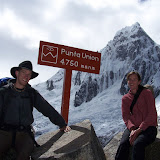
Day 2: We`d been warned that this was the hardest day. The reason being we would ascend about 8000m to cross the Punta Union Pass at 4750m. The morning was a gentle ascent continuing along the valley until you reach what looked like an impenetrable rock wall. Up on the far right hand side was a break and that was the pass we were aiming for. The switchbacks were tight and it was steep but remembering to exhale, take little steps, stopping for short breaks without sitting down really helped. We paced ourselves and enjoyed hiking just the two of us. All the work to get across to the other side was worth it. You come out of the other side to be greeted by even taller, stark mountains, another awe inspiring valley and the glittering lake. It was breath taking. We had lunch and napped in the sun light before the slow and steady descent down. We spent the night at Taullipampa, which is at the height of 4250m. In total it was a 6.5hr hike. We went to bed early as the Brazilian twins were not feeling so good and everyone was tired.

Day 3: Today felt sort of mellow. With all the hardest parts behind us it was a gradual yet steady trip down. That was after we went to a look out for one of the most commonly ice climbed peaks. We could see small specks of bodies working their way up and down. It was hard to believe as they headed up into the clouds. We headed down and followed along the valley as it continued to narrow. A river which started as a trickle from glaciers gurgled beside us until eventually forming a big lake. Today it was cloudy and so we didn`t see all the peaks but there were water birds and cactuses to distract us. The climate is more hospitable and vegetation grows more abandantly. That night we camped right on the river`s edge at a spot called Llamacorral. It`s at 3600m and since it was a little warmer mostof us had our best nights sleep here after hiking about 6 hours.

Day 4: After sleeping well, having one of my breakfast favourites ( yogurt and granola) and knowing that it was the last day we were raring to go. We were off by 8:45, the earliest yet! We had a descent of 700m to cover at a fairly determined pace. The river became more powerful and the vegetation thick. It reminded us of hiking at home. We were a little taken a back when we came to the site of a huge land slide. The path had be uncovered but the size of the boulders all around were pretty intimidating. We got closer and closer to civilization ( more houses, fields, irrigation channels) until we were at the small village of Cashapampa. It only took us about 3 hours ( though Julio says he can do it in 1.5 hr.) To my delight a private bus with huge windows and reclining seats awaited us. An unhappy taxi driver felt he had an unsettld debt with some of the fellow hikers and we waited for over 15 mintues for him to unblockade the road. Amazing what a little money can do!! Later from the highway the mouth of the valley we`d just exited appeared as a small split in the mountain. What was covered in clouds just yesterday loomed over our heads. The mountain range dominated with peaks.

Here are a few of random things that stick out about the trip:
  • All of the peaks have two names. Talk about confusing! The most common name is Quechua using the indigenous language. Spanish is less likely to be used.
  • We saw a really unique tree known as Quenua. It`s bright red, orange bark peels like the skin of a snake.
  • Pampa is the name for the valley meadows we treaded through.
  • We tried coca leaves as they`re known to alieviate altitude symptoms. The Brazilian boys swore by them. The tea is simple and not very strong but when you chew the leaves the bitter taste is overwhelming. Once was enough for me.
  • When we woke up on our second day there was a layer of frost on the tent.
  • The soup that we had with dinner each night warmed us up. The meals were typical Peruvian fare. They have a dish called "lomo ...." and you fill in the blank with meat or vegetables. Lomo simply means a pile of. Sounds appetizing doesn`t it?
  • Though you never know for sure we were glad that we had taken alitidue adjustment pills.
  • One of the guys had brought along incense. It seemed a little silly at first but then when you realize how smelly donkey poo is we appreciated having it around.
  • Cows and horses wander around freely. It`s hard to tell who they belong to.
Santa Cruz Trek

The Lost World.... Visiting Ruins in Northern Peru

With the many ruins from Mexico long behind us we figured it was time to delve into the past again. What better way to understand an area and its culture than through their history. It was time to visit Peruvian ruins and see what they could teach us. Armed with amazing stories, insights and actual first hand experiences we continue to ask questions and wonder how it all fits together. The over lap of mythology, symbolism and long past history throughout Latin America is very interesting and intriguing.

Sipan

As part of a guided tour, we visited two ruins and a museum. Without the aid of the guide it would have been easy to overlook the important details. At first sight the ruins look like giant mounds of dirt, and given the fact that most of the country side is full of dirt and mountains, it was hard to distinguish them at first. At one point along a path we were standing (at ground level) on what was thought to be the 4 or 5th storey of the administrative temple. This was hard to imagine since the only thing that indicated this was that the digging that revealed the lower levels and more obvious brick shapes . Since the buildings were made of adobe (sand blocks) time and weather take their toll. It seemed bizarre to us that an obviously sophisticated culture would build such giant buildings that essentially melted when it rained. It began to make more sense when it was explained to us that even now with the changing weather patterns it only rains a few times every 100 years - and there are theories rain was even more scarce here 1500 years ago.

In the late 1980s a local archaeologist was notified that new, intricate objects were being sold on the black market. This tip set him off to determine where they were coming from. It turns out that grave robbers had found the Sipan (Huaca Rayada) site and looted one tomb and parts of the pyramids. Archaeological work was set in motion and just recently the fifth tomb was discovered. The tombs built in the 3rd century are easy to visit. All the artifacts and skeletons were sent to the museum where they are used to make very impressive exhibits.

This site was the royal burial grounds of the Moche nation. They have unearthed the king, his uncle and a high priest. The tomb tells the story of who was important and what mattered to them. In each tomb was found pieces of pottery that represented people that were going with them to the next world. It was common to have a spouse, concubines, pets, and a guard whose feet were cut off (to ensure they were faithful) buried in the tomb as well. When the important person died everyone else was given anthestetic to ease their passing as they were cermonially killed to join their lord in the tomb. The main person in each grave was ornately dressed with many pieces of clothing and jewellery that would be worn for special rituals. They were also buried with many valuable possessions.

Our tour guide was very proud of this statistic: this museum is one of the top 8 archaeology museums in the world. We don't know who this was according to, but the museum did hold an awe-inspiring amount of intricate gold, silver and copper artifacts along with detailed interpretations of what they would have been used for. My favourite exhibit was the final dislay of what a ritual would have looked like including life sized, moving model people in their ceremonial ornamentation.

The museum is organized chronologically by floor according to when the archaeologists uncovered the artifacts. The first floor is the ceramics representing gods, people, plants and animals. The second is different pre Columbian artifacts, mostly jewellery. This collection included intricately handmade earrings the size of tea cup saucers worn by the king. Finally there was exact replications of how the tombs where found. You could see things like gold pectoral plates, crowns, sandals ( the king never walked) and nose shields ( so the people couldn´t see their mouth and teeth or hear their voices with out distortion.) What remained of the bones was also on display. It was a real shame we couldn´t take pictures, the security there was and no cameras was allowed.

Tucume

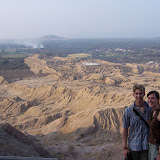
What made the second archaeological site of our day tour worth visiting was the fact that it includes the longest still standing adobe building (700m long, 200m wide). Tucume was the final capital of the Moche people. It is about 200 hectares and has no less than 26 pyramids ( some still being uncovered.) The walk up Pergatory Hill to the look out was relaxing in the fading summer light. This site tells the story of how people groups changed and sometimes it was not easy. The several civilizations who controlled this city after the Moche decline just kept building on what was left behind. One of the final groups reflected the influence of the Catholic church ( hence the name of the hill.) In an attempt to convert the native people the priests dressed up as demons on this hill. If you didn´t confess to their beliefs you to were pushed off. Not exactly Billy Graham style evangelists!!

Chan Chan

Each geographical area has its own style. A mix of ideas about life resulted from different materials being available, the landscape and local flora and fauna. This site being just meters from the ocean was still made of adobe bricks but had undertones of sea creatures, the moon and water. It was neat to see the similarities and differences between here and some of the other ruins we have visited.

It was built in around 1300 AD over 28 square km. It is the largest pre Columbian city in South America and is also the largest adobe city in the world. The city is composed of 9 major sub-cities or royal compounds, each containing a royal burial mound. Today, you can only visit one of the compounds. They guess that about 60 000 people used to live there. Gold, silver and cermaics played a big part in daily living, unfortunately the Spaniards took care of cleaning those goods out long ago. You´d never guess how amazing it used to be unless you have a very vivid imagination.

Restoration is still in progress for the area open to visitors. It was interesting to see the new and old as locals worked to preserve what remains. Within the 4m thick defensive walls were all sort of different areas for soldiers, bathing and religious ceremonies. The most unusual room, with superb acoustics, has 24 niches that they guess were special seats for the aristocrats who listened to musicals or participated in important meetings .

It was a fascinating place to visit and at it's height must have been a truly magnificent location.

Chavin

Chavin was the last ruins we visited in northern Peru - and this city was high up in the Andes. Here it was a whole different world that was constructed long ago ( 1200 to 800 BC). It covers several square kilometers. The Chavin people are thought to be one of the oldest civilizations of this continent and this used to be their most important religious/ceremonial center. This site is beside a beautiful river, and at the foot of a huge cliff face that reminded Jay of the Squamish Chief in BC. The main temple has three different levels and an incredibly intricate network of chambers and tunnels beneath it. We were able to go into some of them, plus there are many more that we could not see because they aren't structurally sound any more. I guess after almost 3000 years of earthquakes and landslides this is understandable! There is also a strange network of ducts, alleys, drainage systems and water channels which researchers speculate could have been used for anything from ventilation to aiding the priests in creating dramatic sounds 'of the angry gods'. A very famous aspect of this place are the "tenon" decorations. These are large stone blocks that were carved to look like faces and heads. They were set in the outer walls of the temple.

These ruins contains large amounts of symbolism. We were there early, immediately when it opened. This was great because we were, for the first time in our whole trip, the only ones in the grounds. But it also meant we were there before the guides showed up for hire, so sadly we expect that we did miss a lot of the less obvious symbolism.

The construction of this place was a huge feat of engineering. To build the immense main square, they had to permanently alter the course of the river... 3000 years ago!! In addition to this, there are intricately carved images of deities such as the puma, condors and snakes on various building walls and pillars. A large 10 ft tall carving is underground at the center of the site. Above all, people are stumped by the incredible network of tunnels.

A lot of theories exist as to how the tunnels would have been used. It is most commonly thought that the priests used some of these to demonstrate their power by manipulating sights and sounds. Candles, mirrors, conch shell trumpets and a healthy dose of hallucinogenic cactus thrown into the mix may have meant a truly out-of-this-world type experience for the ritual participants. Either way, what remains is an impressive site that reflects a lot of thought and dedication to art and culture. As researchers learn more about the Chavin people they are becoming more convinced that this group had a huge influence on the societies that followed them - not only in the mountains but down to the coast and trading with nations as far away as the Ecuadoran coast!

Getting to Chavin to see the ruins involved a frutrating day of waiting for a bus that never came, squeezing into a station wagon for 3 hours of dirt roads and switchbacks, finding almost everything the guidebook recommended in town out of business. We felt generally exhausted and frustrated with Latin America. But, in the morning when we had the ruins to ourselves for hours and as we learned just how important a place this was in the development of ancient South American history we were very glad that we made the effort to come out to Chavin on our own.


Ruins of Northern Peru