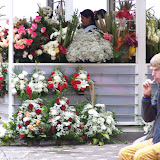
In the midst of this is the city of Huaraz. A strange, haphazard town where the adventure vibe is contagious and there are tour companies (of varying repute) on every corner trying to sell trips to anywhere. As a town, it isn't all that much to look at. A recent (1970) massive earthquake left only about 10% of the city standing with a death toll of about 30 000 people. It is only in the past 20 years that tourism has taken off. In the past people were typically just barely holding on through subsistance farming. With little money and infrastructure this town has not fully recovered. Prior to the earthquake most homes were made of adobe (clay bricks made with straw) but afterwards, if people could afford them, more modern materials were used. Huaraz is a real mix of rich and poor, clean and dirt, old and older, modern and ancient.
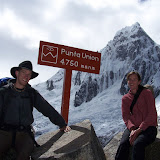
The close mountain ranges are what draws people. The Corderillas Blanca is about 20 km wide and 180km long. The Corderilla Negra on the opposite side is smaller and has no snow peaks. Gristly gray ridges and sheers rocky cliff faces beckon hard core climbers. Snowy peaks and iridescent glacier summits beg to be explored by those who can handle the elements. Turquoise lakes found among mountains peaks, hilly, grassy plains, bright coloured wild flowers and deep valleys surprise hikers as they round the corner. You feel small as you stand by any of the 50 peaks that are over 5700m!
So how did we take this all in? As usual we came with a very loose plan but it came together as we got advice from various local sources. It took the first few days to adjust to the altitude but we didn´t let that stop us. To celebrate our anniversary we went to a mountain lodge where we did 2 hikes and then joined a tour group of 4 ladies - all over 60 years old. We encouraged them as they slowly made their way through a valley to a glacier lake at around 4400 above sea level, with noticably less oxygen. In turn they were witty and had amazing stories to share with us. A few days after this we spent 4 days and 3 nights on a guided trek with a group of 3 other tourists and just yesterday we went horse back riding in the Corderilla Negra.
Now, for our time at the lodge... though the lodge is only about an hour drive from Hauraz ( over rough roads - yeap we got a flat tire on the way back) there was no electricity there. Our bed had a huge duvet blanket (haven`t had one since we left home - what a luxury) so we stayed warm at nights. From about 6 to 10pm a generator was turned on allowing the cooks to see what they were doing as they prepared our fabulous 3 course dinner. The electricity thing did mean having to shower by candle light after we got back from hiking - but that just added to the beautifully rustic atmosphere. The view through our bedroom window was fantastic!
The first day we hiked through two local villages (Llupa and Pitec) and it was like stepping back in time. Regularly you could see woman shepherding their cows, sheep and pigs. Donkeys were used to harvest wheat. Families live in small stone or mud-brick huts. It feels really remote. The second day we planned to hike up to a lake (Laguna Churup) but quickly realized our bodies were not up for the challenge. We went part of the way up to over look a deep canyon and spent an hour there enjoying the view and our lunch before heading home. The third day was our last, so we had to find a way back into town. At about 10am the hiking group of old ladies arrived and as a spontaneous decision we joined them for the day instead of hitching a ride back to town. We didn´t really know where they were going but the views of the valley and ultimately Laguna Llaca made it all worth while. As an added bonous, their van drivers were heading back to Huaraz after dropping the back off at the lodge once they were done hiking, so we got an easy ride back into town after all!
Several days later we also had the opportunity to go horse back riding in the Cordillera Negra. This was 5 hours of amazing sights that we mostly enjoyed... though as I sit here and write this my butt is still somewhat tender. Our guide was an 11 year old who seemed more at home on a horse than on his own two feet and despite his young age was more than competent enough to take a couple rookie gringos through the areas where he has spent his whole life. We could see over the valley to the Cordillera Blanca's snow capped peaks, and down the slopes to fields and tiny farming communities. We rode on a small dirt road up the switch backs to a beautiful look out, and then took small trails over the meadows and down the return part of our circuit. These horses weren't like the lazy ones we rode in BC, where all you had to do was keep them from eating too much! I have never gone that fast on a horse before - galloping along the small dirt road in the middle of nowhere was extraordinary!! During the steep descents on the narrow trails we felt a bit tense a time or two but it was all worth it. It was a fantastic way to see that area, and an afternoon we will remember for a long time to come.
What started with the laboured breathing, a mixed up tummy, mild nausea, persistant headaches, loss of appetite and diffficulty sleeping associated with adjusting to high altitudes ended with some of the most beautiful views ever. Adjusting to high altitudes directly after being at sea level for a while is not easy business. But - there is no way to describe the awe inspriring views or the feeling of achievement you get when standing in the shadows of rugged, snow peaked mountains. Some places in the world are best explored by foot and this is certainly one of them!!!
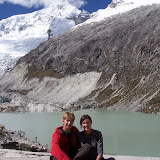 |
| The Cordillera Blanca |