Tuesday, July 29, 2008

Cordillera Blanca: The White, Snow Peaked Mountains of Peru

Cordillera Blanca translates directly to 'The White Range' and is names for the huge number of impressive snow capped peaks that are packed into such a small section of the Andes. There are 27 peaks over 6000m here! This is the highest collection of peaks in the Americas, and is second only to the Himalayas in the entire world. Needless to say the landscape is stunningly beautiful here, and that it attracts hikers and alpine climbers from all over the world.

In the midst of this is the city of Huaraz. A strange, haphazard town where the adventure vibe is contagious and there are tour companies (of varying repute) on every corner trying to sell trips to anywhere. As a town, it isn't all that much to look at. A recent (1970) massive earthquake left only about 10% of the city standing with a death toll of about 30 000 people. It is only in the past 20 years that tourism has taken off. In the past people were typically just barely holding on through subsistance farming. With little money and infrastructure this town has not fully recovered. Prior to the earthquake most homes were made of adobe (clay bricks made with straw) but afterwards, if people could afford them, more modern materials were used. Huaraz is a real mix of rich and poor, clean and dirt, old and older, modern and ancient.

The close mountain ranges are what draws people. The Corderillas Blanca is about 20 km wide and 180km long. The Corderilla Negra on the opposite side is smaller and has no snow peaks. Gristly gray ridges and sheers rocky cliff faces beckon hard core climbers. Snowy peaks and iridescent glacier summits beg to be explored by those who can handle the elements. Turquoise lakes found among mountains peaks, hilly, grassy plains, bright coloured wild flowers and deep valleys surprise hikers as they round the corner. You feel small as you stand by any of the 50 peaks that are over 5700m!

So how did we take this all in? As usual we came with a very loose plan but it came together as we got advice from various local sources. It took the first few days to adjust to the altitude but we didn´t let that stop us. To celebrate our anniversary we went to a mountain lodge where we did 2 hikes and then joined a tour group of 4 ladies - all over 60 years old. We encouraged them as they slowly made their way through a valley to a glacier lake at around 4400 above sea level, with noticably less oxygen. In turn they were witty and had amazing stories to share with us. A few days after this we spent 4 days and 3 nights on a guided trek with a group of 3 other tourists and just yesterday we went horse back riding in the Corderilla Negra.

Now, for our time at the lodge... though the lodge is only about an hour drive from Hauraz ( over rough roads - yeap we got a flat tire on the way back) there was no electricity there. Our bed had a huge duvet blanket (haven`t had one since we left home - what a luxury) so we stayed warm at nights. From about 6 to 10pm a generator was turned on allowing the cooks to see what they were doing as they prepared our fabulous 3 course dinner. The electricity thing did mean having to shower by candle light after we got back from hiking - but that just added to the beautifully rustic atmosphere. The view through our bedroom window was fantastic!

The first day we hiked through two local villages (Llupa and Pitec) and it was like stepping back in time. Regularly you could see woman shepherding their cows, sheep and pigs. Donkeys were used to harvest wheat. Families live in small stone or mud-brick huts. It feels really remote. The second day we planned to hike up to a lake (Laguna Churup) but quickly realized our bodies were not up for the challenge. We went part of the way up to over look a deep canyon and spent an hour there enjoying the view and our lunch before heading home. The third day was our last, so we had to find a way back into town. At about 10am the hiking group of old ladies arrived and as a spontaneous decision we joined them for the day instead of hitching a ride back to town. We didn´t really know where they were going but the views of the valley and ultimately Laguna Llaca made it all worth while. As an added bonous, their van drivers were heading back to Huaraz after dropping the back off at the lodge once they were done hiking, so we got an easy ride back into town after all!

Several days later we also had the opportunity to go horse back riding in the Cordillera Negra. This was 5 hours of amazing sights that we mostly enjoyed... though as I sit here and write this my butt is still somewhat tender. Our guide was an 11 year old who seemed more at home on a horse than on his own two feet and despite his young age was more than competent enough to take a couple rookie gringos through the areas where he has spent his whole life. We could see over the valley to the Cordillera Blanca's snow capped peaks, and down the slopes to fields and tiny farming communities. We rode on a small dirt road up the switch backs to a beautiful look out, and then took small trails over the meadows and down the return part of our circuit. These horses weren't like the lazy ones we rode in BC, where all you had to do was keep them from eating too much! I have never gone that fast on a horse before - galloping along the small dirt road in the middle of nowhere was extraordinary!! During the steep descents on the narrow trails we felt a bit tense a time or two but it was all worth it. It was a fantastic way to see that area, and an afternoon we will remember for a long time to come.

What started with the laboured breathing, a mixed up tummy, mild nausea, persistant headaches, loss of appetite and diffficulty sleeping associated with adjusting to high altitudes ended with some of the most beautiful views ever. Adjusting to high altitudes directly after being at sea level for a while is not easy business. But - there is no way to describe the awe inspriring views or the feeling of achievement you get when standing in the shadows of rugged, snow peaked mountains. Some places in the world are best explored by foot and this is certainly one of them!!!
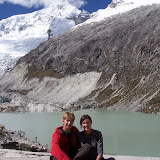


The Cordillera Blanca

Sunday, July 27, 2008

Seeing the Mountains By Foot - Hiking At High Altitude ....The Santa Cruz Trip

Rumour has it that about 90% of tourists that come to this region to hike do the Santa Cruz trek. It is rated as easy to moderate 50 km hike. Nobody really knows what that means though. We weren`t certain we were up for the challenge. With some good advice in hand and full confidence in our guide team we were off.

The trek took 4 days, sleeping in tents with our rented down filled, mummy sleeping bags each night ( that was a smart move.) 4 rented donkeys dutifully carried all the gear up the steep trails and down rocky slopes. They are tough. We happily backpacked only our water, rain gear, the stuff you`d need during the day. It was one gentleman`s sole responsibility to pack and unpack all the gear, load the donkeys, walk with them to make sure they didn`t wander too far, (and they were quick) assist the cook and do any other random jobs. He did a great job ensuring that every thing was very inviting when we finally arrived at camp each afternoon. He took care of details right down to our snacks. My favourite was hot chocolate and popcorn. Yum. The cook Julio doubled as our guide when our guide had to go back with one of the guys who was sick and didn`t have a warm enough sleeping bag. Julio was always smiling and liked making jokes. He happily answered our questions about life in Peru. Here`s a rough outline of what we did each day.

Day 1: Public transportation up to the trail head meant a cramped drive up. We stopped once and changed vehicles. From there it was a 2 hours of hair raising, bone jarring switchbacks that felt like they would never end. There was also the occasional head banging as the roof clearance is minimal. The views were awesome. We also got to see a few lakes. After lunch and waiting for all the details to work themselves out we set off at noon. The hike took 4.5 hours through several scenic villages with kids who were used to tourists and took to begging for candy. Then winding our way along the flat plain bottom of a long valley with mountains in every direction. We stayed at Paria for the night. It is at 3850m. Once the sun disappears the chill sets in. Though the translated jokes from a Brazilian twin were enough to keep us entertained and distracted.

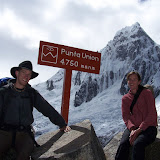
Day 2: We`d been warned that this was the hardest day. The reason being we would ascend about 8000m to cross the Punta Union Pass at 4750m. The morning was a gentle ascent continuing along the valley until you reach what looked like an impenetrable rock wall. Up on the far right hand side was a break and that was the pass we were aiming for. The switchbacks were tight and it was steep but remembering to exhale, take little steps, stopping for short breaks without sitting down really helped. We paced ourselves and enjoyed hiking just the two of us. All the work to get across to the other side was worth it. You come out of the other side to be greeted by even taller, stark mountains, another awe inspiring valley and the glittering lake. It was breath taking. We had lunch and napped in the sun light before the slow and steady descent down. We spent the night at Taullipampa, which is at the height of 4250m. In total it was a 6.5hr hike. We went to bed early as the Brazilian twins were not feeling so good and everyone was tired.

Day 3: Today felt sort of mellow. With all the hardest parts behind us it was a gradual yet steady trip down. That was after we went to a look out for one of the most commonly ice climbed peaks. We could see small specks of bodies working their way up and down. It was hard to believe as they headed up into the clouds. We headed down and followed along the valley as it continued to narrow. A river which started as a trickle from glaciers gurgled beside us until eventually forming a big lake. Today it was cloudy and so we didn`t see all the peaks but there were water birds and cactuses to distract us. The climate is more hospitable and vegetation grows more abandantly. That night we camped right on the river`s edge at a spot called Llamacorral. It`s at 3600m and since it was a little warmer mostof us had our best nights sleep here after hiking about 6 hours.

Day 4: After sleeping well, having one of my breakfast favourites ( yogurt and granola) and knowing that it was the last day we were raring to go. We were off by 8:45, the earliest yet! We had a descent of 700m to cover at a fairly determined pace. The river became more powerful and the vegetation thick. It reminded us of hiking at home. We were a little taken a back when we came to the site of a huge land slide. The path had be uncovered but the size of the boulders all around were pretty intimidating. We got closer and closer to civilization ( more houses, fields, irrigation channels) until we were at the small village of Cashapampa. It only took us about 3 hours ( though Julio says he can do it in 1.5 hr.) To my delight a private bus with huge windows and reclining seats awaited us. An unhappy taxi driver felt he had an unsettld debt with some of the fellow hikers and we waited for over 15 mintues for him to unblockade the road. Amazing what a little money can do!! Later from the highway the mouth of the valley we`d just exited appeared as a small split in the mountain. What was covered in clouds just yesterday loomed over our heads. The mountain range dominated with peaks.

Here are a few of random things that stick out about the trip:
  • All of the peaks have two names. Talk about confusing! The most common name is Quechua using the indigenous language. Spanish is less likely to be used.
  • We saw a really unique tree known as Quenua. It`s bright red, orange bark peels like the skin of a snake.
  • Pampa is the name for the valley meadows we treaded through.
  • We tried coca leaves as they`re known to alieviate altitude symptoms. The Brazilian boys swore by them. The tea is simple and not very strong but when you chew the leaves the bitter taste is overwhelming. Once was enough for me.
  • When we woke up on our second day there was a layer of frost on the tent.
  • The soup that we had with dinner each night warmed us up. The meals were typical Peruvian fare. They have a dish called "lomo ...." and you fill in the blank with meat or vegetables. Lomo simply means a pile of. Sounds appetizing doesn`t it?
  • Though you never know for sure we were glad that we had taken alitidue adjustment pills.
  • One of the guys had brought along incense. It seemed a little silly at first but then when you realize how smelly donkey poo is we appreciated having it around.
  • Cows and horses wander around freely. It`s hard to tell who they belong to.
Santa Cruz Trek

The Lost World.... Visiting Ruins in Northern Peru

With the many ruins from Mexico long behind us we figured it was time to delve into the past again. What better way to understand an area and its culture than through their history. It was time to visit Peruvian ruins and see what they could teach us. Armed with amazing stories, insights and actual first hand experiences we continue to ask questions and wonder how it all fits together. The over lap of mythology, symbolism and long past history throughout Latin America is very interesting and intriguing.

Sipan

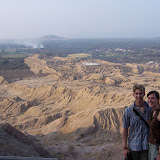
As part of a guided tour, we visited two ruins and a museum. Without the aid of the guide it would have been easy to overlook the important details. At first sight the ruins look like giant mounds of dirt, and given the fact that most of the country side is full of dirt and mountains, it was hard to distinguish them at first. At one point along a path we were standing (at ground level) on what was thought to be the 4 or 5th storey of the administrative temple. This was hard to imagine since the only thing that indicated this was that the digging that revealed the lower levels and more obvious brick shapes . Since the buildings were made of adobe (sand blocks) time and weather take their toll. It seemed bizarre to us that an obviously sophisticated culture would build such giant buildings that essentially melted when it rained. It began to make more sense when it was explained to us that even now with the changing weather patterns it only rains a few times every 100 years - and there are theories rain was even more scarce here 1500 years ago.

In the late 1980s a local archaeologist was notified that new, intricate objects were being sold on the black market. This tip set him off to determine where they were coming from. It turns out that grave robbers had found the Sipan (Huaca Rayada) site and looted one tomb and parts of the pyramids. Archaeological work was set in motion and just recently the fifth tomb was discovered. The tombs built in the 3rd century are easy to visit. All the artifacts and skeletons were sent to the museum where they are used to make very impressive exhibits.

This site was the royal burial grounds of the Moche nation. They have unearthed the king, his uncle and a high priest. The tomb tells the story of who was important and what mattered to them. In each tomb was found pieces of pottery that represented people that were going with them to the next world. It was common to have a spouse, concubines, pets, and a guard whose feet were cut off (to ensure they were faithful) buried in the tomb as well. When the important person died everyone else was given anthestetic to ease their passing as they were cermonially killed to join their lord in the tomb. The main person in each grave was ornately dressed with many pieces of clothing and jewellery that would be worn for special rituals. They were also buried with many valuable possessions.

Our tour guide was very proud of this statistic: this museum is one of the top 8 archaeology museums in the world. We don't know who this was according to, but the museum did hold an awe-inspiring amount of intricate gold, silver and copper artifacts along with detailed interpretations of what they would have been used for. My favourite exhibit was the final dislay of what a ritual would have looked like including life sized, moving model people in their ceremonial ornamentation.

The museum is organized chronologically by floor according to when the archaeologists uncovered the artifacts. The first floor is the ceramics representing gods, people, plants and animals. The second is different pre Columbian artifacts, mostly jewellery. This collection included intricately handmade earrings the size of tea cup saucers worn by the king. Finally there was exact replications of how the tombs where found. You could see things like gold pectoral plates, crowns, sandals ( the king never walked) and nose shields ( so the people couldn´t see their mouth and teeth or hear their voices with out distortion.) What remained of the bones was also on display. It was a real shame we couldn´t take pictures, the security there was and no cameras was allowed.

Tucume

What made the second archaeological site of our day tour worth visiting was the fact that it includes the longest still standing adobe building (700m long, 200m wide). Tucume was the final capital of the Moche people. It is about 200 hectares and has no less than 26 pyramids ( some still being uncovered.) The walk up Pergatory Hill to the look out was relaxing in the fading summer light. This site tells the story of how people groups changed and sometimes it was not easy. The several civilizations who controlled this city after the Moche decline just kept building on what was left behind. One of the final groups reflected the influence of the Catholic church ( hence the name of the hill.) In an attempt to convert the native people the priests dressed up as demons on this hill. If you didn´t confess to their beliefs you to were pushed off. Not exactly Billy Graham style evangelists!!

Chan Chan

Each geographical area has its own style. A mix of ideas about life resulted from different materials being available, the landscape and local flora and fauna. This site being just meters from the ocean was still made of adobe bricks but had undertones of sea creatures, the moon and water. It was neat to see the similarities and differences between here and some of the other ruins we have visited.

It was built in around 1300 AD over 28 square km. It is the largest pre Columbian city in South America and is also the largest adobe city in the world. The city is composed of 9 major sub-cities or royal compounds, each containing a royal burial mound. Today, you can only visit one of the compounds. They guess that about 60 000 people used to live there. Gold, silver and cermaics played a big part in daily living, unfortunately the Spaniards took care of cleaning those goods out long ago. You´d never guess how amazing it used to be unless you have a very vivid imagination.

Restoration is still in progress for the area open to visitors. It was interesting to see the new and old as locals worked to preserve what remains. Within the 4m thick defensive walls were all sort of different areas for soldiers, bathing and religious ceremonies. The most unusual room, with superb acoustics, has 24 niches that they guess were special seats for the aristocrats who listened to musicals or participated in important meetings .

It was a fascinating place to visit and at it's height must have been a truly magnificent location.

Chavin

Chavin was the last ruins we visited in northern Peru - and this city was high up in the Andes. Here it was a whole different world that was constructed long ago ( 1200 to 800 BC). It covers several square kilometers. The Chavin people are thought to be one of the oldest civilizations of this continent and this used to be their most important religious/ceremonial center. This site is beside a beautiful river, and at the foot of a huge cliff face that reminded Jay of the Squamish Chief in BC. The main temple has three different levels and an incredibly intricate network of chambers and tunnels beneath it. We were able to go into some of them, plus there are many more that we could not see because they aren't structurally sound any more. I guess after almost 3000 years of earthquakes and landslides this is understandable! There is also a strange network of ducts, alleys, drainage systems and water channels which researchers speculate could have been used for anything from ventilation to aiding the priests in creating dramatic sounds 'of the angry gods'. A very famous aspect of this place are the "tenon" decorations. These are large stone blocks that were carved to look like faces and heads. They were set in the outer walls of the temple.

These ruins contains large amounts of symbolism. We were there early, immediately when it opened. This was great because we were, for the first time in our whole trip, the only ones in the grounds. But it also meant we were there before the guides showed up for hire, so sadly we expect that we did miss a lot of the less obvious symbolism.

The construction of this place was a huge feat of engineering. To build the immense main square, they had to permanently alter the course of the river... 3000 years ago!! In addition to this, there are intricately carved images of deities such as the puma, condors and snakes on various building walls and pillars. A large 10 ft tall carving is underground at the center of the site. Above all, people are stumped by the incredible network of tunnels.

A lot of theories exist as to how the tunnels would have been used. It is most commonly thought that the priests used some of these to demonstrate their power by manipulating sights and sounds. Candles, mirrors, conch shell trumpets and a healthy dose of hallucinogenic cactus thrown into the mix may have meant a truly out-of-this-world type experience for the ritual participants. Either way, what remains is an impressive site that reflects a lot of thought and dedication to art and culture. As researchers learn more about the Chavin people they are becoming more convinced that this group had a huge influence on the societies that followed them - not only in the mountains but down to the coast and trading with nations as far away as the Ecuadoran coast!

Getting to Chavin to see the ruins involved a frutrating day of waiting for a bus that never came, squeezing into a station wagon for 3 hours of dirt roads and switchbacks, finding almost everything the guidebook recommended in town out of business. We felt generally exhausted and frustrated with Latin America. But, in the morning when we had the ruins to ourselves for hours and as we learned just how important a place this was in the development of ancient South American history we were very glad that we made the effort to come out to Chavin on our own.


Ruins of Northern Peru

Life Changes Slowly Here And Maybe That Isn´t All Bad - Huanchaco

Huanchaco and their Caballitos


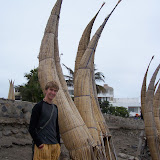
What in the world is that you ask? We spent three days in a beach town just taking it all in. It is very small place renowned for surfing and its handmade old fashioned reed boats. The unchanged nature of these boats is part of what makes them famous. Pottery found 2000 years ago depicts these very same narrow reed boats. The way the boats are "ridden" reminds people saddling up on a horse, with your feet dangling on either side. This is exactly where they got their name from, caballitas de tortora ( little horse).

At first we wanted to go for a ride but when we realized how cold the water was we settled with watching someone else squeal each time a wave splashed her as she got ferried around by a local fisherman. The boats are used to bring out fishing nets and then collected the next morning. Sometimes the men collected crabs or fish off the boat. The boats are wide at the end the fisherman sit in/on and come to a narrow point at the opposite end. Half of a bamboo tree is used as a paddle.

One afternoon I was able to see an elderly gentleman make a boat. Because of the mostly natural materials used, the boats need to be replaced about every 2 to 3 months because they get pretty water logged. The process begins with drying out reeds that are found along the beach. They get laid on the sand until they are dried; a little tough but don´t split. The man had several bundles of them and sorted them according to length, one pile of reeds was 15 ft long and the other 10ft. Each of the two piles were split fistful by fistful into two. At this point we have four piles of two different lengths of reeds.

Now he works on one pile at a time but does the identical thing to each of the four piles. To make each part bouyant and a cluster of foam is inserted at the end of the reeds. He basically rams the package of foam in and wraps the reeds around them so the foam is in the middle. To ensure it doesn´t come apart he secures the length of the reeds in three spots using another piece of reed. Once he is satisfied, it is re-inforced with fine rope starting at the fat end, going until the point, wrapping it all securely as he goes.

Now that all four pieces are formed he has to join them together. The shorter lengths are squeezed into the longer lengths, in a similar manner as the foam. He secures everything in place with rope. Then the two longer pieces are joined together using rope. The final pushing and pulling is done with two people as it is secured very tightly.

The manner with which this man carried out his work was one of well practiced knowledge. At one point I watched as he measured a reed from his feet to his nipple line. His makeshift but relaiable measurements would ensure that the length of his boat where he stored his fish or would sit in was just the right size for him. His well worn hands were weathered with many years of practice.

It was a really unique experience to be able to observe such an ancient tradition still being such a part of the regular daily life of this town. Thinking that the fish we ate for dinner was caught by a man in a little reed boat of 2000 year old design really puts the saying 'passed down from generation to generation' in a new perspective for us!

Sunday, July 13, 2008

"I'm Pissed!" and So Were A Few Peruvians

So this past Wed (July 9th) we boarded a bus for crossing into Peru just in the nick of time ( you have to pay a 10 cents toll and we only had $1 and had to go somewhere else for the change.) That is the precise moment our adventures began. Little did we know what we´d gotten ourselves into. An 8hr ride turned into 15!!!! Yeap it was a long day.

We knew something was up when the bus pulled over and stayed there for longer than normal. When we checked it out we were stationed at the front of a military base and waiting for a group. Strange. We paid for tickets and no one had said anything about a group. Why would we wait for them? Turns out they'd privately hired the bus and instead a few strangers were added to the mix. It was shortly after 7 am and the group wouldn´t be ready until 9 am. It turns out we´d meet this group of high school aged kids in Cuenca at the native ritual ceremony. Yes we had nothing to do but wait. This became the theme for the day.

The ride was decent. After three hours we began to wither a little. We were no longer in the Andean highlands but something a kin to the a hilly, warmer, remote place. The open windows did little to keep us cool. The bus was beginning to get stinky wit hot and sweaty bodies.

When we arrived in Maraca, the Ecuadorian border town where we were given the bad news. At approximately 3km away from the border we were going to have to be patient. There was a nation wide transportation strike in Peru. In an attempt to show support for farmers and to protest rising food prices drivers were taking the day off and creating havoc by setting up baracades and rioting. In addition to this the group had a scheduled meet and greet with the local politicians and community.

A fellow traveller needed to get across to catch flights later that evening and was longing for other options. A local, rather adamant woman on our bus couldn´t taking the waiting any more. After getting some of her money back she was determined to find her own way. She jumped ship and invited us to join her. Speaking Spanish makes it so much easier. We declined. Either way was bound to be full of adventure. The energy of the group was appealing to us. The group´s purpose of engaging in the culture was what intrigued us.

What we didn´t sign up for was the uncertainity. Would the group go ahead? Would they stay the night in a school? The leaders of the group strategized as they waited for the local politicians to join the parade. School aged kids lined the streets. Everyone was WAITING. The order disintegrated when we produced a camera. They swarmed around us like flies asking us questions, pushing to get our attention. They were thrilled when we taught them to count to 10 in English. It was intimidating because there was so many of them. I began to get tired. It was about that time that I spoke of my frustrations ( hence the title). Jay was very patient.

The plan kept changing. We looked into renting a room. Thankfully not putting down a deposit because when we got back to the party rumour had it that once the dance performance was done we were on our way. Just a few hours late! The group was lacking efficiency and simple tasks took forever. When we finally left got to the border it took 2 hours to get across. To be fair part of the problem was there was a single boarder guard. There was a paper to be filled in but it was random as to the length of detail that would be required, so you couldn´t even hand it out before hand so everyone would be ready. Crossing borders in the dark doesn´t leave you a good impression of a place. They didn´t even have a flush toilet on the Peru side!!!

We were flashed down by police about an hour into Peru. We couldn't go any further because the road was blocked by a group of rioters. With a group of over 50 people you hear every imaginable explanation and in general there was chaos. Maybe we´d have to walk. Couldn´t we just turn around? Ohh people´s argumentative spirits were up being tired and fed up with the confusion. One of the leaders disappeared with the police to investigate. Shortly we got a cell phone call from him giving us the go ahead. They´d bribed the locals. This was 9:30 at night. Our options were pretty limited. So with much relief we continued.

The rest was smooth sailing. They gracefully invited us to join their group for the evening or even for a few days. They´d be sleeping at another military base. After using the bathroom at the first place I was more than willing to take a chance at finding our own accomodations. We seriously thought about the offer considering the safety of being in a big group. We unloaded the group first and decided to go out on our own.

Though a little uncertain about being in a new country and town, finidng a taxi and a room we easy. It was now 11:30pm and we just wanted something clean and safe. We paid too much for our noisy room. Morning came quickly and we did a little walk about town.

We discovered there really wasn't much there. Alot of the city (lonely way up north in the desert) and its' infrastructure were destroyed by a flood. It seems like it is still recovering. Also we were reliefed to discovered it had been a single day strike. By early afternoon we were on a plush and well cared for bus. It felt like luxury. Our hopes were restored and we were much better prepared for enjoying our next place.

Saturday, July 12, 2008

Sights and Sounds of Ecuador

  • Bus floors are particularly slippery. Watch yourself!

  • It is a treat when your window on the bus opens

  • Buses cost roughly $1 / hour - that would mean $5 or $6 from Ottawa to Toronto... The only difference is they typically stop alot more often so you might only make it as far as Ajax or something like that.

  • The fried plantain often sold at street corners, looks and smells pretty gross. It's baked or charred really over coals.

  • Roasted guinea pig tastes somewhat like rabbit

  • Mountain roads are rarely closed for construction - just dangerously covered with large piles of loose gravel, dump trucks, front end loaders, construction workers and busses trying to squeeze by without tipping off the edge

  • There are yummy bakeries and pharmacies on almost every block, with the occasional book and health store thrown in
  • Liga de Quito won the Copa Santander Libertadores - the South American equivalent of the European UEFA Championship - VERY BIG DEAL

  • Most graffitti is political in nature - typically anti-Bush and anti-Uribe (Columbia's president)

  • Hamburgers all come in little yellow bags
  • Empanadas are basically like beaver-tails, except with cheese inside
  • You can get awesome pizza slices for $1 and it comes with a cup of pop
  • Beer costs about $1 for about 750 ml. How's that for a deal!
  • Gas costs $1.48 / gallon (1 gallon = 3.8L, $0.39/L), and it is the same price at every gas station in the country

Sights Of Ecuador

Sometimes our Spanish is Lacking but This Was a Really Great Opportunity

Tonight will be day 5 in Cuenca. I discovered that though this city is probably my favourite I am ready to get going. With visions of hiking in Peru and being near the coast ( aka warm weather) I´m finding it hard to be in the here and now.

Yesterday the sun finally made an appearance, after a week with out it. It warms up beautifully and the parks spring to life with people playing soccer and volleyball. Cuenca is a town renowned for it´s colonial buildings. But that´s not all it offers! Rumbling rivers, mountainous peaks, lots of green space and quaint places to enjoy a meal, mostly without the influence of tourism. There are plenty of museums too. We got the run down on how Panama hats are made. You could see the finishing touches in action. The other musuem was acollection of art, coins and ethnography (a fancy word for the study of cutlures.) You walked through displays of Euador's indigenous groups participating in daily life activites.

While we were at the museum we were invited to the celebration of the summer solstice. Yeap that was 2 weeks ago but they`d postponed the activity. It turned out to be more like a pilgrimage to 3 sacred spots. There was music and incense. The leaders were dressed in more traditional type clothing. It´s a little hard to explain because I don´t understand the significance of what we saw. The singing and the cermony were in Spanish. We wondered how much to participate in.

High above the city on a hill beside a cross the final ceremony was completed. Everyone was invited to raise their arms and turning in each of the cardinal direction, as well as up and down, the good spirits were invited from each of those areas and then washed over people. I know that sounds sort of strange. The leaders also blew out alcohol. There was some chanting.

So, you are probably asking "Why´d you do it?" We figured the best way to learn was to do it. You can watch a movie or hear about it but there is something unique about experiencing it with all your 5 senses. The smell of the incense, the squeeze of hugging a stranger, being a part of the crowd, seeing the leaders passing on their traditions and hearing the ryhthmic pounding of a drum. What a great way to know what people do and how they do it.

Well I´d say that certainly counts as a cultural experience!

Hats, Flowers and a Pilgrimage