Sunday, July 27, 2008

Life Changes Slowly Here And Maybe That Isn´t All Bad - Huanchaco

Huanchaco and their Caballitos


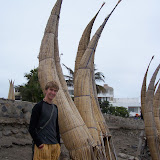
What in the world is that you ask? We spent three days in a beach town just taking it all in. It is very small place renowned for surfing and its handmade old fashioned reed boats. The unchanged nature of these boats is part of what makes them famous. Pottery found 2000 years ago depicts these very same narrow reed boats. The way the boats are "ridden" reminds people saddling up on a horse, with your feet dangling on either side. This is exactly where they got their name from, caballitas de tortora ( little horse).

At first we wanted to go for a ride but when we realized how cold the water was we settled with watching someone else squeal each time a wave splashed her as she got ferried around by a local fisherman. The boats are used to bring out fishing nets and then collected the next morning. Sometimes the men collected crabs or fish off the boat. The boats are wide at the end the fisherman sit in/on and come to a narrow point at the opposite end. Half of a bamboo tree is used as a paddle.

One afternoon I was able to see an elderly gentleman make a boat. Because of the mostly natural materials used, the boats need to be replaced about every 2 to 3 months because they get pretty water logged. The process begins with drying out reeds that are found along the beach. They get laid on the sand until they are dried; a little tough but don´t split. The man had several bundles of them and sorted them according to length, one pile of reeds was 15 ft long and the other 10ft. Each of the two piles were split fistful by fistful into two. At this point we have four piles of two different lengths of reeds.

Now he works on one pile at a time but does the identical thing to each of the four piles. To make each part bouyant and a cluster of foam is inserted at the end of the reeds. He basically rams the package of foam in and wraps the reeds around them so the foam is in the middle. To ensure it doesn´t come apart he secures the length of the reeds in three spots using another piece of reed. Once he is satisfied, it is re-inforced with fine rope starting at the fat end, going until the point, wrapping it all securely as he goes.

Now that all four pieces are formed he has to join them together. The shorter lengths are squeezed into the longer lengths, in a similar manner as the foam. He secures everything in place with rope. Then the two longer pieces are joined together using rope. The final pushing and pulling is done with two people as it is secured very tightly.

The manner with which this man carried out his work was one of well practiced knowledge. At one point I watched as he measured a reed from his feet to his nipple line. His makeshift but relaiable measurements would ensure that the length of his boat where he stored his fish or would sit in was just the right size for him. His well worn hands were weathered with many years of practice.

It was a really unique experience to be able to observe such an ancient tradition still being such a part of the regular daily life of this town. Thinking that the fish we ate for dinner was caught by a man in a little reed boat of 2000 year old design really puts the saying 'passed down from generation to generation' in a new perspective for us!

Sunday, July 13, 2008

"I'm Pissed!" and So Were A Few Peruvians

So this past Wed (July 9th) we boarded a bus for crossing into Peru just in the nick of time ( you have to pay a 10 cents toll and we only had $1 and had to go somewhere else for the change.) That is the precise moment our adventures began. Little did we know what we´d gotten ourselves into. An 8hr ride turned into 15!!!! Yeap it was a long day.

We knew something was up when the bus pulled over and stayed there for longer than normal. When we checked it out we were stationed at the front of a military base and waiting for a group. Strange. We paid for tickets and no one had said anything about a group. Why would we wait for them? Turns out they'd privately hired the bus and instead a few strangers were added to the mix. It was shortly after 7 am and the group wouldn´t be ready until 9 am. It turns out we´d meet this group of high school aged kids in Cuenca at the native ritual ceremony. Yes we had nothing to do but wait. This became the theme for the day.

The ride was decent. After three hours we began to wither a little. We were no longer in the Andean highlands but something a kin to the a hilly, warmer, remote place. The open windows did little to keep us cool. The bus was beginning to get stinky wit hot and sweaty bodies.

When we arrived in Maraca, the Ecuadorian border town where we were given the bad news. At approximately 3km away from the border we were going to have to be patient. There was a nation wide transportation strike in Peru. In an attempt to show support for farmers and to protest rising food prices drivers were taking the day off and creating havoc by setting up baracades and rioting. In addition to this the group had a scheduled meet and greet with the local politicians and community.

A fellow traveller needed to get across to catch flights later that evening and was longing for other options. A local, rather adamant woman on our bus couldn´t taking the waiting any more. After getting some of her money back she was determined to find her own way. She jumped ship and invited us to join her. Speaking Spanish makes it so much easier. We declined. Either way was bound to be full of adventure. The energy of the group was appealing to us. The group´s purpose of engaging in the culture was what intrigued us.

What we didn´t sign up for was the uncertainity. Would the group go ahead? Would they stay the night in a school? The leaders of the group strategized as they waited for the local politicians to join the parade. School aged kids lined the streets. Everyone was WAITING. The order disintegrated when we produced a camera. They swarmed around us like flies asking us questions, pushing to get our attention. They were thrilled when we taught them to count to 10 in English. It was intimidating because there was so many of them. I began to get tired. It was about that time that I spoke of my frustrations ( hence the title). Jay was very patient.

The plan kept changing. We looked into renting a room. Thankfully not putting down a deposit because when we got back to the party rumour had it that once the dance performance was done we were on our way. Just a few hours late! The group was lacking efficiency and simple tasks took forever. When we finally left got to the border it took 2 hours to get across. To be fair part of the problem was there was a single boarder guard. There was a paper to be filled in but it was random as to the length of detail that would be required, so you couldn´t even hand it out before hand so everyone would be ready. Crossing borders in the dark doesn´t leave you a good impression of a place. They didn´t even have a flush toilet on the Peru side!!!

We were flashed down by police about an hour into Peru. We couldn't go any further because the road was blocked by a group of rioters. With a group of over 50 people you hear every imaginable explanation and in general there was chaos. Maybe we´d have to walk. Couldn´t we just turn around? Ohh people´s argumentative spirits were up being tired and fed up with the confusion. One of the leaders disappeared with the police to investigate. Shortly we got a cell phone call from him giving us the go ahead. They´d bribed the locals. This was 9:30 at night. Our options were pretty limited. So with much relief we continued.

The rest was smooth sailing. They gracefully invited us to join their group for the evening or even for a few days. They´d be sleeping at another military base. After using the bathroom at the first place I was more than willing to take a chance at finding our own accomodations. We seriously thought about the offer considering the safety of being in a big group. We unloaded the group first and decided to go out on our own.

Though a little uncertain about being in a new country and town, finidng a taxi and a room we easy. It was now 11:30pm and we just wanted something clean and safe. We paid too much for our noisy room. Morning came quickly and we did a little walk about town.

We discovered there really wasn't much there. Alot of the city (lonely way up north in the desert) and its' infrastructure were destroyed by a flood. It seems like it is still recovering. Also we were reliefed to discovered it had been a single day strike. By early afternoon we were on a plush and well cared for bus. It felt like luxury. Our hopes were restored and we were much better prepared for enjoying our next place.

Saturday, July 12, 2008

Sights and Sounds of Ecuador

  • Bus floors are particularly slippery. Watch yourself!

  • It is a treat when your window on the bus opens

  • Buses cost roughly $1 / hour - that would mean $5 or $6 from Ottawa to Toronto... The only difference is they typically stop alot more often so you might only make it as far as Ajax or something like that.

  • The fried plantain often sold at street corners, looks and smells pretty gross. It's baked or charred really over coals.

  • Roasted guinea pig tastes somewhat like rabbit

  • Mountain roads are rarely closed for construction - just dangerously covered with large piles of loose gravel, dump trucks, front end loaders, construction workers and busses trying to squeeze by without tipping off the edge

  • There are yummy bakeries and pharmacies on almost every block, with the occasional book and health store thrown in
  • Liga de Quito won the Copa Santander Libertadores - the South American equivalent of the European UEFA Championship - VERY BIG DEAL

  • Most graffitti is political in nature - typically anti-Bush and anti-Uribe (Columbia's president)

  • Hamburgers all come in little yellow bags
  • Empanadas are basically like beaver-tails, except with cheese inside
  • You can get awesome pizza slices for $1 and it comes with a cup of pop
  • Beer costs about $1 for about 750 ml. How's that for a deal!
  • Gas costs $1.48 / gallon (1 gallon = 3.8L, $0.39/L), and it is the same price at every gas station in the country

Sights Of Ecuador

Sometimes our Spanish is Lacking but This Was a Really Great Opportunity

Tonight will be day 5 in Cuenca. I discovered that though this city is probably my favourite I am ready to get going. With visions of hiking in Peru and being near the coast ( aka warm weather) I´m finding it hard to be in the here and now.

Yesterday the sun finally made an appearance, after a week with out it. It warms up beautifully and the parks spring to life with people playing soccer and volleyball. Cuenca is a town renowned for it´s colonial buildings. But that´s not all it offers! Rumbling rivers, mountainous peaks, lots of green space and quaint places to enjoy a meal, mostly without the influence of tourism. There are plenty of museums too. We got the run down on how Panama hats are made. You could see the finishing touches in action. The other musuem was acollection of art, coins and ethnography (a fancy word for the study of cutlures.) You walked through displays of Euador's indigenous groups participating in daily life activites.

While we were at the museum we were invited to the celebration of the summer solstice. Yeap that was 2 weeks ago but they`d postponed the activity. It turned out to be more like a pilgrimage to 3 sacred spots. There was music and incense. The leaders were dressed in more traditional type clothing. It´s a little hard to explain because I don´t understand the significance of what we saw. The singing and the cermony were in Spanish. We wondered how much to participate in.

High above the city on a hill beside a cross the final ceremony was completed. Everyone was invited to raise their arms and turning in each of the cardinal direction, as well as up and down, the good spirits were invited from each of those areas and then washed over people. I know that sounds sort of strange. The leaders also blew out alcohol. There was some chanting.

So, you are probably asking "Why´d you do it?" We figured the best way to learn was to do it. You can watch a movie or hear about it but there is something unique about experiencing it with all your 5 senses. The smell of the incense, the squeeze of hugging a stranger, being a part of the crowd, seeing the leaders passing on their traditions and hearing the ryhthmic pounding of a drum. What a great way to know what people do and how they do it.

Well I´d say that certainly counts as a cultural experience!

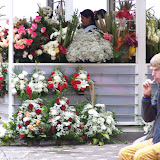
Hats, Flowers and a Pilgrimage

Tuesday, July 8, 2008

On The Road to Peru

This is a bit of a step back in time. We were in Baños ( meaning baths, you´ll see why a little later) at the end of June. Getting there turned into quite a mishap when bus drivers would not give us a straight answers. Unfortunately the weather was crummy so we didn´t do as much outdoor fun as planned. Part of the problem was the clouds or rain covered the hillsides and mountains so what fun is going on a look out hike when all you see is clouds. We rented a room with a fire place, enjoyed friends that we´d made at the last hostal and wandered the streets watching locals make taffy.

Our last night we went to the hot water pools. The water comes from two different sources: a nearby waterfall ( that we could see from our 2nd hostal room) and the volcano. As you might imagine the temperatures were very different. From cold to 43 degrees celcius. Yeap that was hot. A large group of gringo teeanagers unwinding from house building did a great job providing entertainment for us through their antics.

The next highlight was the train ride along La Nariz Del Diablo ( Devil´s Nose.) This wasn´t just any train ride but we were on the roof passing over rickety bridges with tracks switch backing on steep hills above rivers. Originally the railraod was completed in 1908 connecting Guayaquil ( a western coast town ) to Quito. That meant blasting it´s way through the avenue of the volcanos. At the time it was considered an engineering feat and the hardest railraod to build.

Things have changed due to landslides from torrnetial rains. Only a small section is usually run, taking about 7 hours to complete. Nature strikes again and that section is split in two with a more recent landslide. As a result we bused most of the way and were on the train for a grand total of 1.5 hrs but we did the death defying section so it was all worth it! The switch backs advance and reverse to accomodate a height change of 1 km. The views were amazing.

The ride on the top was good until it felt like the train was lurching to the same side we were sitting on. We were packed in and there was a network of bars to hold on to but still the safety measures taken here are not really that reassuring. But the $1 we paid for our cushions was worth ít.

Making Our Way to Peru

Wednesday, July 2, 2008

How Do We Spend Our Time?!?!

Somebody recently asked us what we do all day. It´s an honest question and it goes along with the thoughts about what we are doing this for. Some people have asked how our vacation is going. An innocent question I´d say but the answer is not so simple. Willingly being exposed to uncertain circumstances, new places, strange food and many other unique things takes it toll and means that you learn things you never could sitting at a desk or spending a week at a resort. How do you take that all in stride and make the most of it?

Before we left, we spent lots of time saving money to make this possible. I guess we could have spent the money on two cars, more clothes or house renovations ( we look forward to making some of those happen - we´ve had lots of time to dream.) Instead we took time to explore the world and its people. We have been faced with a rising awareness that life back home is simple compared to most. It also becomes more clear the the Canadian philosophy of ultimately valuing the individual at all times comes at a cost, a cost that at times seems dangerously high. Our imaginations and views of life have been challenged and we´ve been made keenly aware that we have so much room to grow.

That being said .... where was I? A typical day.... No day is ever the same. Sometimes we set our alarm and sometimes we don´t. It depends if we have something important to do or a bus we can´t miss. Jay remains an early bird and often spends an hour or two being quiet; listening to the iPod, reading and journalling before I wake up. At that point he is raring to go. Breakfast it is. Lately breakfast has been included with the price of our hotel, which makes it super easy. If it's not, we usually find bakery for fresh rolls or the grocery store for yogurt and granola. The hotel breakfast typically includes a hot drink (hot chocolate is my favourite option), fresh juice (pineapple, orange, blackberry...), an assortment of rolls or toasted bread with home made marmalade and if you are lucky they fry or scramble an egg.

Now comes the more challenging part of our day. What will we do? It depends on the place and what it has to offer. We consult our Lonely Planet guide book for ideas to get us started. Talking to local people is our favourite way of gathering information: a taxi driver, the cashier at a store, the old man resting on a park bench. People are generally friendly and willing to offer advice and recommendations. Some places (especially in Mexico and Ecuador) have tourists information booths. We love to casually wander around a place the first day we arrive. Then we do touristy type things on our own. We rarely use a guide or tour agency. Planning those sorts of details are usually easy enough once you´ve figured out the transportation. That being said, figuring out the local public transportation isn't always that straight forward, especially when you get a few bus drivers in row who tell you they are going where you want to go... even when they are not!

Transportation out here can mean many things. In Quito we resisted taking the taxis because the drivers take advantage of the fact that we were white. Generally instead of using their meters you had to barter with them. We were used to that from Nicaragua but that is not how the system is SUPPOSED to work here, so we often had the feeling of being somewhat cheated each time we got in a cab. Other times transportation might mean waiting an hour at the road side for the right bus to pass by. Or going to the station and arriving just in time to catch the bus that´s leaving, then you've got to grab the handrail of the moving bus and get in quickly or you will be left behind. We´ve spent many hours on buses, our longest trip was an over nighter that took 18 hours. One of the most interesting ways of getting around a new city is just walking around new places and getting the vibe and pulse of a city and the people who live and work there.

Then there´s the logistics of a new place that have to be learned. One of the most important things you want to find out is if / when it is safe to walk around. I recently asked a guy working at a hostal that and he had to hold back a laugh, we´de just come from Quito (not safe) to a rural village ( very safe). We can´t drink water out of the tap because it will make us sick, so we have to buy water. On any given day we consume about 5 litres. You gotta plan ahead for that because being dehydrated at an elevation of 3000m makes us grumpy!! Then there´s choosing resturants and hostels, for both of these types of decisions we may start with recommendations from locals or the guidebook but we ultimately go with our instincts - if it looks like a sketchy place to stay, or a restaurant that'll make us sick we move on to the next one. We have a whole collection of photos of places we´ve stayed to help us remember them. It´s a neat arrangement.

The majority of this is done in Spanish and involves a little bit more thought and energy. If we are really tired our Spanish ability is equivalent to that of a small child, which can mean some pretty silly mistakes and blank, confused looks. Connecting with each other, the locals and people back home is all really important to us. We do that is so many ways. Our latest phone calls home were excellent because we had the first good connection in months. Journalling regularly helps us process what we see and do.

In many ways this seems a vague type of life routine and yet we hope it gives you a glimpse into what we do. Some days are not easy but we are much better at rolling with the punches then when we started 10 months ago. The pleasure of experiencing so many new things with all of our senses continues to amaze and excite us.

Tuesday, July 1, 2008

HAPPY CANADA DAY EVERYBODY!!!

It is relatively early on July 1st here in the sleeply little town of Baños de Agua Santa, Ecuador. I just went for a walk as everything is starting to open up, tour operators trying to sell me trips for the day, a really nice old lady tried talking me into moving to her hostal, the guy I bought water from tried talking me into extra chocolate... so all in all things are humming along as usual here.

How normally things are going here this morning makes for even more of a contrast from how we expect the day is going to progress back home. We are wishing for great weather for all of you Canadians planning on partying, BBQing, watching fireworks and perhaps having a bit to drink???

We have been able to take part is some pretty great, very random, Latin American fiestas along the way - but today are definetly going to miss going down to Parlimant Hill and being part of the festivities there with friends, family and strangers. We're not quite sure what we'll do to celebrate here, but I am certain we'll figure something out.

We hope you all have a fantastic party and
ENJOY THE FIREWORKS!!!