Monday, March 23, 2009

Bonn Om Touk: The Water Festival - The Best Party of the Year

From Monday Nov. 11th until Thrusday Nov.14th the city has an influx of over a million people.  Everyone comes to cheer on their village rowing team and partake of the festivities.  Whether that be trying local, traditional food or catching a glimpse of the king or having your share of the local brew, you'll be sure to be treated to some new and exciting things at the Water Festival.

The water festival is what the locals look forward to  all year long.  As the rainy season winds down, the merry making begins.  The Tonle Sap Lake and Mekong River are the life blood to many Cambodia people.  The ways of water are so intricately woven into the livelihoods of families as they fish, boat, dredge, bathe in and drink from the water.  As the Tonle Sap swells with rainwater, the current actually change direction and begins flowing downstream, emptying into the Mekong.  A bountiful fishing season is about to begin.  Also, in ancient Buddhist traditions the rising of the full moon is a time to commemorate the beginning of a new and hopefully plentiful harvest (mainly rice.)  In celebration and thanksgiving of these events the people gather together in the capital to share in the excitement and enthusiasm.  

The highlight is the boat races.  After months of training and preparation, teams of anywhere from 20 to 60 oarsmen paddle their way down the river. With matching clothing and the traditional scarves (krama) wrapped around their necks, the team chants as their bodies' pulses rythmically dipping in their paddle, forwards, backwards and again.  Some teams stand, while others sit in their boat.  With determination and skill the brightly painted dug out canoes make their way across the finish line.  The competion is stiff as 424 boats strive for first place.  

As we wandered the busy streets our senses were piqued.  Fresh cotton candy was offered by one man.  The next woman was toting about seasoned, sun roasted snails.  The guy on his bike had a large kettle of boiling corn.  Vendors sat tiredly or walked about mindlessly selling their trinkets; a cheap bracelet, bamboo jewellery, knock off watches, souvenir T-shirts.  The palace area was lively as people jostled about, waiting for the arrival of the king.  Aristocrats took in the boat races dressed in finely woven silk garments.  Tourists with large cameras posed, flushed and sweaty beneath the afternoon sun.  Small children vigilantly kept watch for stray bits of food or lost tidbits.   Security guards dressed in somber greens and blues, watched as the crowds gathered on street corners, in resturants and on balconies.  The water front area was a buzz with activity.  

Learning to experience the joyful celebrations and the sad moments of life through the lenses of another culture is an unbelievable opportunity.  As all of your senses are engaged, you can beginning to realize how amazing and diverse this world actually is.  To begin to understand what these expereiences mean and the impact that it has on people and community is a an intricate, passionate and beautiful occassion . 


Sunday, February 22, 2009

Catching Up

What better way to spend a lovely, lazy Sunday afternoon than catching up with friends? And that is just what we've been working on ( it cetainly is a work in progress.) Though long over due, it is about time we share with you a little more about our trip to Cambodia, Vietnam and Hong Kong.

The turbulent past that continues to haunt Cambodians will not soon be done away with. Inspite of those hardships there is a deep and resiliant beauty that is often seen in their gaze. Many warm days were spent exploring the culture and history of a people nearly fogotten by the world. We poured over books and asked lots of questions. People are willing to talk, believing that as they share their story we can learn about the pitfalls of human nature, those things that need not be repeated. In sharing their stories they gather strength to realize their value as human beings, and slowly their confidence grows. We are thankful for the brave men and women that allowed us to see their innner workings so we could learn to be better people. We left Cambodia with a strong sense of responsibilty to share what we experienced. It is in the following entries that we hope you will get a taste of just that.

The entries will be posted as they get finished in the very near future...

The Coolest Organization In The World

from November 6, 2008 ...

I just received an email asking me what Tabitha is. For the last year as we've described the Cambodia portion of this trip I have wondered that very question myself. I thought our time with my aunt Janne would clear that up. Funny enough the very first night we were together she said it was hard for her to describe the organization.

She has been a way at a silk fair this past week. Turns out the people (a large majority are ex pats) in Singapore are crazy about the silks products the families here make. So twice a year she goes to answer questions/do presentations as well as display and sell the hand made silk items. The successful goal for this year was to raise $150 000. But how does this money get back to the people, the poorest of the poor?

There are 4 main areas of out reach: community development, cottage industry, house building and wells. The first two is run by locals to get them back on their feet, to regain their pride and sense of worth that was lost beginning in the Pol Pot time. The second two promotes donations from international communities and allows them an opportunity for hands on work. We were able to see the operations in motions and help build houses too.


The community development is a huge part of what the local staff support. They currently work in 10 provinces in Cambodia. Families who are wiling to have a dream, big or small, can join the savings fund. A Tabitha staff worker visits the community on a weekly basis, collecting money from the participants. They then hold on to the money and together they keep a written record of the money, until the family has saved up enough money to buy their dream. Maybe it is a bag of rice, a bike, medicine, a mat to sleep on, supplies to send their children to school. At the end of each dream cycle ( 10 week period) they receive 10% interest on their savings. With renewed confidence and pride they beginning to make their lives better. Those from Tabitha that come along side the poor are usually involved and supporting the families for about 6 or 7 years, at about $20/family/year. So let's keep those donations coming.


The Cottage Industry is a fancy term that describes employing and empowering women so they can support their families. The handmade items are a big hit around the world; from linens to ornaments to purses to children's toys to silver jewellery, plus the special orders. Many of which are made from pure Cambodian silk, one of the best in the world. They are crocheted, knitted, woven, sewn, or carved. It is up to the individual to determine how much time and energy they'll invest towards the work, as the raw materials are provided and through piece work they are paid a fair price. HIV is prevalent and this impacts people's quality of life and ability to make an income. Tabitha's method of do what you are able is a saving grace for many families. Some of the the women work at the shop/show room and others have been able to buy a sewing machine with their savings and bring the machine home with them.

Where are you right now as you are reading this? There is a good chance that you are at your home. Imagine if you didn't have a computer, a bed, a reliable roof over your head, a kitchen table. How would you feel? It is a little different as Cambodia is tropical. But imagine if your house was just a few boards thrown together, a bent piece of tin or cardboard supported by bamboo and thatch. Safe and secure are not the first words that come to mind.

So that is where the community from abroad helps out. The donations of time and money are received by those who need it most. Together the communities decide who the recipients will be. Tabitha choose communities where over 75% of the people make less than $2/day. The elder is often a liason person, but the individuals take ownership of the decision making and the projects. Whether it be for wells or a house the recipients must raise a small portion. This can take many months and years. Tabitha monitors participants to ensure that they are committed to making the best use of the resources. They are encouraged to share water with those around them. The wells provide families with a source of income and more time to work towards their goals. Over time people can grown their own gardens and build extensions on to their homes.

Not many people can say that they have a aunt in Cambodia. And few people are able to proudly say that through family they can more clearly see how one person can make a difference in the world. Together we can and do bring about the changes in the world that we wish for and dream about.


Friday, February 20, 2009

There and Back Again

This little note will focus more on the "back again" aspect of life....

So for us it feels like we hit the ground running. After waiting for months to return to Canada we felt this growing unease about actually embarking on the last plane that would return us to our home, to winter weather, to family and friends, to routine, to less diversity, to organization. As the day to leave Cambodia approached we both second guessed our decision. Why were we returning to cold Canada? Jay had a job lined up for mid January, so we knew that money would soon begin to flood our bank account, but even that was not quite enough incentive to bring us back. Experiencing the Christmas cheer with family and friends was certainly a primary motive. Travelling, being on the move constantly and having no roots leaves you feeling exhausted. We were tired. Perhaps it really was time to take what we had accomplished ( many feats and adventures) and put it into some greater framework. To try to use it to change the world and ourselves as we make a difference where we are. Yeah that is no small calling!!

The flight home was decadent, so luxurious on it's own accord. You're going to have to be in the air for between 14 to 16 hours straight anyways. As we flew over the Arctic I awoke and had a pasty, dry mouth. It was disorienting to wake up and forget where you were and feel so strange. But before long the stewardess had been rung and was delivering us each a chocolate ice cream bar. The service we received was award winning. When the coldest hours of the day rolled in the ladies served a cup of noodle soup ( you know the ones where you pour boiling water over hard crunchy noodles, leave them as the heat works its' magic.) We even had a menu that outlined what our meal options were going to be. They had unlimited numbers of snacks. Our group of three seats was for just the two of us and so I was able to sprawl out and fall asleep. Jay spent the majority of the time watching movies. Who knew that there was over 50 choices of TV shows, 100 music selections and the most recent movie releases? Really what do you do with that many options?

Our 36 hour day involved flying from Phnom Penh to Hong Kong ( where we weren't charged extra for being a little over weight)to Toronto to Ottawa. The longest hours were those we waited in the Toronto airport. You are so close and yet those miles that separate you can only be diminished by waiting for yet another plane. As good Canadians we spent a good three hours in Tim Hortons sipping hot chocolate and catching up with our journaling, trying to distract ourselves. We had arrived at terminal 3 and needed to catch our flight in terminal one. A free train service transports you back and forth. As we stepped into the train there was a blast of cold air. It was the most unwelcome sensation, but also a poignant reminder of where we were. So many things to be discovered awaited us and the cold air was just the beginning. There was no visible snow on the ground.

Since we had cleared customs in Toronto it was torturous to wait as Jay went to use the bathroom. My family waited for us as at the bottom of the escalators. They were so close now. We'd used that very same gate a month and a half earlier when we had left for Cambodia. There wasn't too many tears, but certainly a few choked conversations. Dutifully my sister had brought us some warmer clothes. By the time we left the airport I had on a huge down filled 3/4 length coat. Jay was wearing snow pants and ski googles. Even still we commented on the weather and about being cold. Our family reassured us that this was warm compared to just last week. It was of very little comfort.

We slept in our own bed that night. Jay's sisters, who had last cared for our house, had done an excellent job cleaning the house and more importantly decorating it for Christmas. We spent a short time enjoying homemade Christmas treats with Laurie and Ben( sister and bro. in- law.) before being dropped off at home. I started the holiday season off right by trying a bit of every one. The tea we drank warmed us from the inside out. We were so glad to be back. The cozy atmosphere, filled with warmth and family was an excellent beginning. That is what we had longed for many times while we were away. That was one of the many things that brought us home.

We are still in the process of discovering the many others. Here are a few other things that we've discovered we love about our home, Ottawa and Canada. We'll hold off on the things that have irked and challenged us for another entry:0) A fully loaded kitchen with all the spices I can dream of. Ohh and I know where to find the sharp knives and a cutting board. The ease of public transportation. NO wait ... the bus drivers were on strike and the driving was terrible. Being so close to the river and starting to run again because there are tonnes of places that are close by and safe. Having a lap top computer which we can install with the programs we want and use. Picking up our phone and dialling friends and family. There are no extra numbers to dial, you can make yourselves comfortable or do something else at the same time and you can hear each other very clearly. Friends who change their plans to accomodate us. Talk about feeling special! Celebrating my birthday with a house full of people who know and love us.

Thursday, December 25, 2008

A White Christmas

Merry Christmas Everybody!!!!!!!

I just wanted to put up a really quick little Christmas note.  No, we haven't forgotten about this little 'ol blog, but we have been a bit otherwise occupied.  We had a fantastic time in Cambodia, and Janne, Miriam and Tuit were better hosts than we could ever have dreamed of!  We arrived back in Canada early on Dec 16 and spent the better part of the following week trying to get over the jet lag.  Angela did really well, but I spent several days waking up at 3:00AM, wide awake and ready to go.  Thankfully now we're both pretty much adjusted to this time zone.

Though the cold has been taking some serious adjusting after being in relatively warm climates for essentially the last 2 years, we are really enjoying having a white Christmas.  And above all, being able to share this very special time with family and good friends is just incredibly fantastic.  We appreciate that gift so much more after having spent so much time separated from those closest to us for so long.  We've been blessed with some great time with each of our parents and siblings.  We've also been able to catch up with many aunts, uncles and cousins.  We are so thankful to see most of our grandparents - and are looking forward with great excitement to when we will be able to see grandma and grandpa Ritskes (who we won't get to see this week) sometime after the holidays.

The culture shock of being back in Canada, the wierdness of having a house, a car and more than 2 sets of clothes, how are we adjusting to it all.... this will all have to wait for a later day.

But for now, it is:

Merry Christmas 
[and in the words of Charles Dickens' Tiny Tim] 
"God Bless Us, Everyone!!"

Thursday, November 6, 2008

pheom phen ... what's that you Say??


So it is now mid Feb. and I am looking back on what we've experienced. We spent about a month in Phomn Phen (PP.)

Learning to Be Thankful

So you learn about a war, how does that make you feel? Does if matter if it is close by or far away? I think it does. Will you be impacted differently if you know some one, if there is a face put to it or memories recollected? I think it does. Can we learn from those expereinces and try to be a better presence in this world? I hope it will.

We visited the genocide museums of Cambodia. And I am thankful that we don't have such a thing at home. Though I suppose the closest thing would be the War Museum. The stories and history that accompany these places is eery and speaks of the utter destruction of lives, culture,art, religion and community. Perhaps this was all made even worse because the damage was done by and to their own people.

In an attempt to level the playing feild and create their version of a perfect society the leaders of the Khmer Rouge gave the command to kill all skilled people and their families. To simply kill them was too easy, instead they created the worst and most terrible way to interrogate and torture them first and then equally devasting ways to end their lives, often in the presence of those they loved.

If you were not murdered it was quite possible that you might have wished that you were. The people were forced to leave the capital and return to their home villages out in the country. Hard, physical labour was demanded from everyone. Long working hours were expected with very little food. People were given jobs such as digging water canals and rice farming, but they didn't know how to do them and few were left to teach them. Anything even vaguely perceived as disobedience was not tolerated.

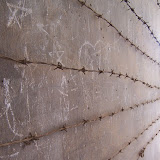
Have you ever been to a place where you feel or sense something so great? In the high school turned prision, the laughter of students was cut short and is now replaced with the emptiness. As you wander through the classroms turned into cells, the photographs of the prisoners do much to iluminate the conditions there. In the space known as the Kiling Fields only birds and local traffic break the silence there. The grassy mass graves are slowly being filled in by the rain and years of erosion - but not before the remains of bones and clothes have been removed, to be used as the focal point for the huge monument there.

Hearing the stories of friends of my aunt has put a very personal touch on the recent tradegy (late 70's). Each day as we drop my cousin off at school we travel streets where people beg, have no clothes, sniff glue etc. These are not the back street either, it is the main road. The faces of the people express a mix of emotions from fear and distrust to the occasional glimmer of hope.

There are two ways one can take what is seen and heard; to withdraw and see no value or joy, or to take hold of the faint ray of hope. The examples of moving forward are found in those that grasp for the hope that tomorrow will be a new and different day.

Memorials of Khmer Rouge Genocide

Thursday, October 30, 2008

Hong Kong

They say that beauty is in the eyes of the beholder. Does that mean that the definition of beauty is always changing? If that is the case there are many beautiful sites to behold in this strange and wonderful place. A place that has so many ironies, wealth, organization and flair.

We have enjoyed the surprise meals that we've been getting. It is definitely a culinary experience here, made a bit more complicated by the fact that less people speak English here then we were expecting. Feeling a little out of sorts with the language helps us appreciate again how great it was we spoke basic Spanish. Being able to interact with the average Latin American in their own language meant some really great people experiences. There is a certain air of formality about how things are to be done, a set of established rules that are not necessarily obvious to travellers; how to drink your tea, eat with chopsticks, climb the stairs, use the subway. They have thought of many details and it is all very organized around here. It is encouraging that we find ourselves easily adapting to uncertainities. The food is very yummy and flavourful.

Our first day we got acquainted with the neighbourhood by wandering around (we were staying in the Kowloon Peninsula part of Hong Kong). We also went to the flower, bird and goldfish market. It was so orderly as everyone had there own shop with a real roof. We thought of all you flower lovers out there and had a good laugh when we saw tulips and lilies in boxes being unloaded, bearing the name DeBoer and Hilverda from Holland. There is a little bit of everything you could possibly imagine.

We were able to use this time to the max. Yesterday (Oct 31st) we spent the day on a guided bus tour around Hong Kong Island. It was a very diverse taste of religion, markets, and the local geography. We rode a tram to the highest peak in the area and Jay visited his first Buddhist/ Taoist temple. We bought my first set of pearl jewellery. It is even handmade! We thought it would be the perfect accessory for tea and chocolate cake at a fancy hotel ( The Penisula) where there is a dress code. We took an old fashioned boat around the remnants of the floating Aberdeen fishing village, which will soon be demolished to make room for an amusement park. We saw the famous Jockey Club and a beach that had all if its sand imported from Australia. We wandered around Stanley market but held off buying anything until Cambodia, which we are assuming will be a lot cheaper. The evening was spent watching the daily light show, which involves over 50 different buildings and is recorded in the Guiness Book of World Records.

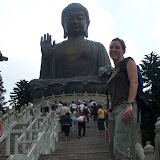
Today ( Nov. 1st) we took a cable car on Lantau Island to the biggest Buddha statue around, Tin Tan. We climbed the 268 steps to stand near the 34 m, 250 tonne bronze, outdoor statue. Everything is very lush, green and a live. It was a little bouncy on the way home as the wind had picked up. We also floated across the harbour on the Star Ferry, not to be confused with the very prestigious Star Cruises (maybe next time!). A final great experience was discovering flamingos, parrots and the mandarin duck in the Kowloon park near our hostal.

All in all it has been a very different experience here in Hong Kong than anywhere we've been on our trip so far. It was a real eye-opener for me (Jason) being in my first big-crowded Asian city, where there is so much wealth, but certainly lots of poverty that is pushed to the edges. We saw everything from $500,000 1ft tall statues for sale in a shop near the harbour, to the condemed Aberdeen fishing village where everybody lives on a tiny fishing boat in an out-of-the-way corner of the island. We are very glad that we took the opportunity to spend a little time here on our way to Cambodia, it has been WELL worth the 4 days. Enjoy the photos!


Kowloon Peninsula


Hong Kong Island Tour


Lantau Island

Monday, October 27, 2008

And We Are Off Again ... To Cambodia This Time

So much has happened over the last few weeks. We were able to celebrate and share in many different things. Visiting with so many people was tiring in ways that we couldn't have imagined, but we so badly wanted to catch up with as many people as we could. After spending over a year with just the two of us it was important to mix it up! Since we were only home temporarily we tried to lay low. Strange is the single easiest word to describe a quick visit to Ottawa.

Tomorrow bright and early we are flying to Toronto (Oct 28.) From there we will be flying to Hong Kong where we will spend 4 nights. Jay will be taking his longest single plane ride ever at 15 hr and 35 minutes!! Throw in a little jet lag and I'm sure we'll be a little bit confused. Good thing English is pretty common in Hong Kong. We met a young women who grew up in HK while we were hiking in Machu Piccuhu. She gave us several pages of suggested tourist destinations, right down to the details of using public transportation.

We are not entirely sure what to expect in Cambodia. In some ways it will be similar to Latin America ( for example the poverty, broken history) but I imagine there will be some differences as well. We will be spending some time with my aunt who continues to assist with an aid organization she started there about ten years ago. We look forward to seeing her in motion and sharing in her life there.
Many blessings to you all. We hope that these last few weeks of our travels will pass by splendidly. Being home for a small break in between has given us just a small taste of what awaits when we return. Not too sure how we feel about that but look forward to whatever those adventures will be.

Tuesday, October 21, 2008

Hanging Out in Florida

Being greeted by a familiar face at the airport is something I always look forward to. To me it is the perfect ending to travelling. What I thought would be tearful exchanges were replaced by big hugs and cheerful conversations. Phew!

When we first arrived back into North America we spent 5 days in sunny Florida. Fort Myers was not a place I'd thought about visiting but when friends of ours invited us to join them there for a few days we looked into changing around our flights to make it work. It was worth it! We were a little nervous but that was just butterflies after being away for so long.

Our favourite parts were meeting and playing with the two young girls and playing games after the busyness of the day was behind us. There was lots of swimming, walking, shopping, girl time and relaxing. What a life!

These are a few of my favourite pictures from that time. I couldn't easily fix the spacing and the captions. If you click on any of the captions you can go directly to the collection of photos.


From Arriving back in North America


From Arriving back in North America


From Arriving back in North America


From Arriving back in North America

La Paz ... Peace?!?!?!

Though we didn't end up spending much time here, La Paz did seem to be a place that was worth more time. It is a bustling metropolis of people and traffic with beautiful look outs, the "death road" biked by many tourists, fabled markets and lots of variety on the food front. Of course there are a few big, snow capped mountains near by as well.


Though we didn't have much time as we had hoped, we did manage to taste ice cream and the gooey local empanadas ( pizza pocket style delicacy.) We visited a chocolate shop and brought home all sorts of flavours of chocolate. We spent a morning wandering the streets buying the last of our souvenirs. Who knew it would be so hard to find an alpaca blanket? We'd been warned about the llama fetuses in the witch market but it was still strange to see all sorts of items and trinkets that get used in rituals we don't understand. We spent the afternoon at the Coca Museum, where we got a lot of insight in to this local tradition. The hotel we stayed at had a great common area with a fireplace and a portable DVD for when we were tired of the crowds. It was such a treat but we did have to sleep in separate beds (no doubles.)

The shoe shine men all wore balaclavas. This anonymous element allowed them to be a little rude with out you knowing who they were. We found them to be a more aggressive then any where else. Over all we found people to be very friendly and generous, especially the American Airlines ladies who helped us sort out our flights. Thanks for a great visit Bolivia, short and sweet.


Friday, October 10, 2008

Canadian Hospitality at It's Best

How do you describe something so familiar and yet not? What words can you use to explain returning to a place that you call home and yet it has changed? Whose life has not taken a different path over the last year?

So much is very different than when we left 14 months ago. And that includes us. We have begun the journey of exploring the perspectives and characteristics that will define how we see the world differently. And we have been doing that amongst those that we love and care for. It's something we often found ourselves longing for while we were away. And now we are surrounded and enveloped by our friends and family.

We arrived back in Canada on Mon. Oct 6, after spending 5 days in balmy Fort Myers Beach, Florida with Tamara, Ian and their 2 super-cute girls (Karenna and Anneke). We were met at the Toronto airport by Tom (Jay's cousin once removed.... I think). As we walked outdoors he warned us that we might not be able to fit all our luggage and us into their sports car. By the time we got to the car we were all ready to at least give it a try. The good news was that we got it all in and we didn't even have to stuff anything under the hood. It did mean that Jay hit his head on the soft topped roof and was sitting side ways - but really that just was par for the course most other places we'd come from.

Somehow people knew that the pasta in South America sort of stinks. They are just so skimpy on the sauce. Our first meal on Canadian soil was a beautifully served spaghetti with chunky meat sauce and fresh garden salad done up with blueberries, a generously shared bottle of our hosts favourite red wine, warmed pumpernickel bread and real butter and homemade apple pie garnished with whipping cream. Thanks so much Lynelle! Other meals have included delicious pastas and stews. Eating cereal and cold milk along with other prepared breakfasts sure beats the lame Peruvian continental, stale-bread-no-eggs breakfasts we'd become accustomed to. Yep it is quite possible that we've gained a few pounds already!

We've spend time reacquainting ourselves with friends from Ottawa who have moved away. Toronto and Barrie are beautiful in the fall. We caught up on news of paddling, nursing and church friends. Some have new babies and other are adjusting to new homes and jobs. Seeing Sabrina on her way back to India and Agnes just before her huge RN test were awesome treats for us both. Our evening with Francois was fantastic - we got to be his first non-family visitors in his new home in Toronto. Hearing Troy's stories about his new job, enjoying Kristen's hospitality and meeting their daughter Lydia for the first time was a great homecoming.

It seems easier for them to tell us about their past year. How do we summarize so much of what we have seen and done into a few conversations, without endlessly repeating ourselves? We are still trying to figure that out. Though it's quite likely you'd hear us say, "Well in this place they did such and such," at some random moment. Or remember when ...

Before we know it, the stories will be lost in our memories if we don't tell them. So I guess even though we might feel hesitant or still in the process of trying to work it out, sharing is the best way to savour, remember and reflect on what this past year will all mean.

Monday, September 29, 2008

Copacabana and the Island of the Sun

Copacabana is a small Bolivian community right on Lake Titicaca. We spent 5 days enjoying this quaint, picturesque village and its' people. The corner room we rented in our hotel had two huge picture windows looking over the lake and was warmed by the afternoon sun. The room felt like a suite to us with two large sitting chairs, wonderful blankets and a really well done mural painting on the wall. It was super great for relaxing in, especially since there wasn`t much else to do.

One day we took a slow boat over to the legendary Island of the Sun. Depending on which myth you believe, this maybe where the first Inca king and other gods emerged from. Regardless of what you believe there are some ruins to be seen. The island is small with about 3000 inhabitants and no cars on it. There is a walking path from the north end connecting villages together all the way to the south. It took us about 3 hrs to make our way from one side to the other. Of course there was lots of ups and downs which meant great views of the bays as well as the Corderilla Real, a extensive mountain range with snow capped mountains.

At the ruins there was the usual hypothesis about animal images in stones but the real gem was the extensive labirynth of rooms. It didn`t take long to feel like you were a mouse in a maze trying to find your way out. Along with tunnels the building was constructed on several planes so you were constantly changing levels with out even realizing it.

The surroundings made it a wonderful place to be. Sparkling, deep blue water as far as you can see bordered by snow capped mountains. At the south end there was also a sequence of water pumps and an original set of Incan stairs. Unfortunately we were stopped three times to pay an entrance fee as we made our way along the path. We weren`t certain the money actually was invested back into the community or used for maintenance of the trail. It was a really interesting experience. The walk was worth it!

Friday, September 26, 2008

Our Time In Bolivia Cut Short

We worked hard to get to the capital of Bolivia. However no matter how far ahead you plan things are always subject to change here. Who knew that there would be political troubles when we made the decision to fly out of La Paz?? It seemed like the perfect way to ensure we spent some time there. Well, did that ever back fire!!!

Over the last month the political problems have escalated. To simplify it, there has always been problems between the East and West. The eastern part of the country is vey powerful and rich because of mining and natural resources. Just recently the first indigenous president (from the poor West) was elected. It was serious business. To ensure that things were a little bit peaceful no alcohol was sold for two days prior to the election. Being from the West the president sympathizes with the large majority of poor, subsistence farmers. The farmers would like the wealthy landowners in the West to share some of their loot and land. The Easterners are proud of all the work that they have done and are unwilling to just hand it off to someone less capable. It is a very complicated and troublesome 500 year old arguement.

But what that meant for us was uncertainties about flying. We began to hear rumours that blockades and rallies were interfering with local and international transportation. As the majority of the problems were not in La Paz we made our way there, hoping for the best. One of the first things we did was check in with the American Airlines office. The women who helped us spoke English and they were so helpful. That also happened to be the day that American Airlines cancelled all of their La Paz - Miami flights for the rest of September... until Oct 1st (and we were scheduled to fly out on the 2nd)! After a little discussion we were surprised when one of the ladies suggested we get out of there, I think her words were something like "Get out of here as soon as you can, it is not likely to improve". She meant that flying from one of their other South American hubs was recommended and they would cover the cost to change the tickets but not travelling expenses for us to get there.

Though La Paz continued to have demonstrations and there was an increase in the number of riot police after important talks, there were no serious problems while we were there. The high altitude means that the planes can only take off with a limited amount of fuel due to weight restrictions so they have to land with in a short time to refuel and upgrade their crew. This means the La Paz - Miami flight must land in the Bolivian city of Santa Cruz... in the tumultuous western half of the country. The protests, riots and road blockades meant that the Santa Cruz airport could not guarentee the necessary crew or fuel to the airline, which forced American Airlines to cancel their La Paz - Miami flights for the entire month of September. After hearing all of this from the lady at the AA office we had a tough decision to make. We could stay in La Paz and hope there would be a flight out on the 2nd of October, or we could leave Bolivia. If we decided to leave Bolivia... Where would we fly out of? How would we get there? When would we leave?

We spent many long hours analazing our options. In the end we retraced our steps to Lima, Peru. Flying to Chile and only having one or two days there just didn't seem worth the extra costs, though it was tempting. In total the two days of busing cost us about $100 (saving us around $800 over the other alternatives) and since we had little money and lots of time we went back to Lima. A bonus of the long bus trip back through Peru was we were able to return to Arequipa for one night and we were reminded of how much we loved the city. We also bumped up our departure so we could spend more time with Ian, Tamara and the girls in Florida. It was a little nerve wracking but it all worked out. An ironic twist is that as best as we can tell from trolling Google, it looks like miraculously our Oct 2 flight ended up leaving from La Paz after all!! Even though it turned out we probably could have just stayed in La Paz, we are happy with our decision to bail and head for Peru. The wise words of a fellow traveller still remain true, "In Bolivia everything is possible, but nothing is certain."

Saturday, September 20, 2008

The Last of Our Peru Adventures Or So We Thought!!

Cusco to Puno
For an extra $10 we decided to take a guided bus tour from Cusco to Puno. There were 4 stops along the way rather than just busing straight away for eight hours.

The first stop was visiting an ornate church which was located in a very small town. It was loaded with gold and local artist renditions of heaven and hell and all sorts of other Biblical stories. What continues to amaze us is how an indigenous twist is woven into much of the religion and rituals. Secondly we spent about half an hour wandering around a set of ruins that is about half way between the two cities. It was an ideal spot for store houses as the geography and crops were very different in each direction. They`d take fruit and veggies from Cusco and swap them with the dried meat coming from Puno. There were over 120 circular storehouses, most were dilapidated and falling into disrepair. A massive temple dominates the site. The original middle wall would have stood at 16m. The weathered wall now stand an impressive 12m. On both sides of the wall circular support beam remnants still stood.

After a simple but nutritious buffet lunch we stopped at the highest point of our journey. I`m pretty sure that most people spent more time looking at souvenirs than the snow capped mountain. It felt sort of lame after seeing and climbing mountains that were higher. The last stop of the day was a small museum that unfortunately was being visited by all the other groups we`d been leap frogging as we drove. There were 8 tour buses from 3 different companies trying to file through. The museum had some neat stone artifacts and a great calendar showing the South American civilization timeline in comparison to other world civilizations.

When we arrived at the bus station we met the right guy with all the connections. He was soft spoken and polite. We got a discount on the room where we stayed that night and the taxi ride to our destination was thrown in for free. He set up our tour and bus tickets for the next day. It was service with a smile.

The Floating Reed Islands
You may have heard of the famous Lake Titicaca. It is the highest navigable freshwater lake in the world. Our tour guide proudly told us all sorts of random information, even leaving out some details trying to bait us to come back for the more extensive afternoon adventure. The collection of small islands is referred to as Islas de Uros. They are all made by hand and can be moved at any time. Who knew?

The process begins with cutting huge floating bricks (about 2" squared) from reeds roots and soil. Pegs are added to one corner of each brick and then they are all tied together. When the community has decided where they want to live they some how weigh it down. It is secured in one spot by the reeds growing up around the edges or by being tied to other close by islands. Reeds which are laid criss cross over the bricks are collected from about 3 km away. This ensures that they are the best quality one. As the reeds dry or decompose they just keep adding more. The reed layers become as thick as the blocks. The reeds are used to make boats, houses, mats and used to start their fires with. We even had to try eating the fleshy end. It wasn't bad

Life here is very communal. The people are very used to tourists and make their livelihood trying to sell handicrafts. Some of the islands have trout ponds. The locals seemed very eager to please and were willing to invite you into their houses, which were very simple with very little furniture. For example the house we visited had 4 people sleeping on the reeds. It did have a small TV powered by a solar panel ( given to them by the government.) They cooked on open air fire pits or small stoves. On this particular island one lady cooked for all the 30 others who lived on the island as well. The oldest person in the community was 100 years old. Our guide told us they only have basic health care on one of the islands. She attributed the limited resources to the peaceful island living where there's no stress and no one gets sick. There is one outhouse of stone and reeds tucked in a back corner. If used properly it`s not supposed to go into the water but is burned some how. They are only a short boat ride from the mainland ( 30 minutes) so that is where they get most of their supplies.

It was an interesting thing to experience but certainly not for everyone. Limited space and very tight quarters meaning you don't have a lot of time and space of your own. But life is full of surprises and uncertainties. It is a tradition that has been carried on for many years. Here is a great example of mixing new and old together. As we boarded a handmade boat the women performed a good bye song. It ended with "hasta las vista baby." I couldn`t help but smile. I don`t think they came up with that on their own!

Saturday, September 13, 2008

The Inca City: Machu Picchu

Hiking to this outstanding sight is by far the best way to explore and enjoy Machu Picchu. We worked really hard for that experience and it was worth all the effort. Words can´t really do justice to what you see and feel in this place. There are so many unanswered questions and such mystery surrounds it. The American Hiram Bingham is credited for discovering Machu Picchu in 1911 but nowadays people disagree with some of his hypothesis. No one will ever really know so it`s best to take it in and use your own imagination.

For two hours we wandered around with our group seeing the main, important structures. Our guide made his propositions as to what they were and how they might have been used. It was still early and we didn`t have too many crowds to contend with. The rest of the day was our own until about 4 when we needed to gather our stuff and get on the slowest moving train ever!!! Jay and I spent hours basking in the sunlight, either checking out the spots we`d missed or lazing about on the terraces.

Some of the highlight spots:

  • MP can roughly be divided into 3 areas: agriculture, religious and urban ( residential and industrial: weaving and ceramics)
  • Temple of the Condor - On the ground is a rough image of a condor head. Behind it the rocks form its` wings. Tucked away behind the wings was an area that might have been intended as three sacred tombs but was never completed. The tombs are about 2" high, just the perfect size for a mummy in the fetal position.
  • Temple of the Sun - This is the only circular building in the whole place. It is made of medium sized, very smooth rocks because it was an important spot. Though we couldn`t get inside it we stood in lower down room that likely belonged to the priest. Some of the multiple windows are aligned with the sunlight at solstices and equinoxes. In the middle of the temple is a big rock. Below the temple is a sort of cave with niches and a step like altar that was thought to be a tomb but no mummies were found there.
  • Sacred Plaza - There is the temple of three windows but no one knows why there are 3 or what they represent. There are several unfinished pieces of work as pillars are set up along the inside of the temple but nothing is resting on them. On the left of that is the unfinished and damaged main temple. This entire area was constructed with large, very smooth rocks.
  • Intihuatana/ Hitching Post of the Sun - Some say it is a sundial and our guide said it was used as a calendar. Either way this was an astronomical tool. At certain times of the year the sunlight`s rays would cast a shadow of 21 or 31 degrees on this tool so they could determine the solstices and equinoxes. Such information was important for farming related rituals. The stone is missing a chip on a corner because a crane smashed it during a beer commercial production!
  • Rock Quary - Rocks of all sorts of shapes and sizes are found embedded in the middle of the site. You get a better idea of all the work that was involved. There are a few experimental rocks where professors have used local supplies as a way to demonstrate methods used to break the rocks; from tools to heating the rock and then cooling it.
  • Ceremonial baths - Thought I am uncertain where the water source is you could see it cascade from one pool to another. In total there are 16 of them connected by tunnels and waterfalls.
  • In the center is the main grassy plaza. Beyond that is the area that was divided into houses. There are 3 different blocks. All the structures are missing the roofs as they were made of thatch. Twine was wrapped around rocks sticking out of the side of the walls to secure everything in place. One house near the temple has a special cubby corner room that has a drainage tunnel. They guess the room was used to make Chicha the special corn drink. On floor of one room was a smooth concave mortar dish. In another a shallow bowl that when filled with water would reflect the stars and act as a telescope.
  • Safety - Rather than have locks or gates small circlular holes were carved out of the rock. This was a sign that certain people were not permited to enter any further. At times rope may have been threaded through these as a visual way of saying stay out. They were found mostly in the religious areas.


The Inca Trail - Making Our Way to Machu Picchu

Over 5 days of hiking and 4 nights of sleeping in tents we made our way the famous Machu Picchu Inca City (MP.) We were in a group of 13 people most of whom were about our age. However in total there was over 30 of us; the guide and someone out of university in training to be a guide, a cook and his assistant, and 20 porters. The porters are my heros. During the high season they leave their families and work for days at a time. Simply dressed;wearing rubber sandals ( made from tires), a long sleeved jersey and shorts they are used to all the elements. They carry about 25kg on their back because only local residents are able to use animals for transportation. At our introductory meeting Cesar, our guide said that the porters run. I was a little skeptically but with their sinewy legs they often passed us a brisk pace.

Day One:
We`d been promised that today`d be our easiest day. Bright and early we were picked up from our hotels and in a small, comfortable bus we began the journey to km 82. The km marking system starts from Cusco and goes MP. Km 82 is where the road stops, as only the train continues. As we arrived at the parking lot a buzz of activity began. Groups of porters wait for their crews to make an appearance and the moment they did the men set off to work making bundles of equipment to set upon their backs. Prior to that they sit dressed in matching jackets/uniforms joking with each other.

At several main entrance points along the path there are checkpoints where it is necessary to show your passport and ticket. Each day only 500 new people are allowed onto the trail, porters and staff included. 500 people can visit MP on a daily basis. Realizing the importance of this sight the Peruvian government decided it was time to set some rules in place. Things have changed for the better since rules and better security were initiated.

The hike was mostly flat with a few rises and dips. However it was much hotter than expected as we walked through dry desert areas. That made it a little tiring. We stopped for lunch and had our first introduction to how camp is set up, right down to the toilet system ( a porter carries ALL the waste out.) We were never lacking food and tea was always served in ease the adjustment to altitude.

We passed many small villages and a few ruins (Huillca Raccay, Patallacta and Pulpituyoc), one of which was a rest station the Inca runners would have used as they delivered their cord messages. There were stories about the history and nature along the way. We saw two rest stations that the Inca runners would have used as they delivered their messages.

Day 2:
It lived up to our expectations of being the hardest day. Though it was windy and gray most of the day the rain never came. We went from about 2950m up to the highest pass of 42oom. Yeap that is a huge change. There were alot of stairs. Everyone was able to go at their own pace. The last ascent to the pass felt monumental as it was very steep and we`d just had lunch (we were faster than anticipated eating at 10:30!) The pass is known as Dead Woman`s pass because the rock form a silhouette that looks like a woman.

There were at least 4 different groups at each camp site. It took a while for things to feel more remote and less touristy. This night we were a lively bunch (before everyone started getting sick) as we played cards. With so many nationalities and personalities thrown into the mix we easily found ourselves laughing and joking. From this camp you could also see the next ruin (Runcu Raccay, a round shaped rest stop) about half way up the mountain side taunting us with the the steep hike up to it.

Day 3:
We were starting to fall into the groove of trekking. We started each day between 5:30 and 7am with a cup of wake up tea delivered to the tent. Boy do we miss that! There was plenty of time to wake up slowly while taking in the scenery as we had about 40 minutes to pack before breakfast. When we were fed and cleaned up ( at each spot we got a basin of hot water to wash with) we set off.

This day was full of ups and downs, with the second half meandering through cloud forest with lots of various sized and coloured humming birds. We also set foot on the original Inca roads. Up until that point the government had redone and adjusted the trail to make it easier and safer for tourists. We saw another prominent ruins ( Sayac Marca) and hiked up two much smaller and easier passes, with our camp perched over the valleys at the second spot. We made sure to take a picture at the tunnel of love (named after a couple who were murdered in the area for adultery .... or so the story goes.) As we`d gotten away from the crowds the experience seemed more authentic.

That night I decided to wash my hair. Maybe it wasn`t the best choice but it felt wonderful. The clouds loomed above our heads and opened just for a sprinkle, along with thunder and lightning in the distance. It was an early night, but before we packed it in we went to one of the highest points on the opposite side from our camp. The clouds had parted and you could see two of the tallest snow capped mountains. Brilliant!

Day 4:
Today was our last official day of hiking and their was lots of look forward to, mainly walking through the Sun Gate and catching our first glance of MP from a distance before walking to the city and getting to the hot springs to relax our weary bodies. Unfortunately my tummy was doing flip flops. Before we left camp we said good bye to the porters and passed along a hefty tip for all their hard work.

The ruins that we saw along the way today were mostly terraces and store houses. With the exception of Phuyupatamarca which was just down from our campsite and has lots of special ceremonial baths. After lunch we made our way up 50 last stairs to the Sun Gate (Inti Punco.) We followed the river and orchids dotted the greenery along the way. As you rounded the last corner you were met with majestic views of old buildings set in the safe valley surrounded by green mountains on most sides.

With the view in sight we were motivated to keep up the pace. There were three temples or possible burial sites along the last stretch. Our first introduction to the actual city was a Bolliwood production in the making. Over 20 men and women dressed in skimpy clothes with feathers every where, dancing to seductive music!! They were in the way of our perfect post card picture but we had a good laugh anyways.

Saturday, September 6, 2008

A Word About the Incas

Wonder how the workers took huge stones and made them into impressive buildings? Or wondering why a terrace was created? Well you are about to get a small snapshot into their methods. Alot of what remains gives us hints about their culture and the rest is just invented. People have been pretty creative! Really it is a mystery but people have made some best guesses.

THE ROCKS
It is said that the structures are built in such a way that a single piece of paper will not fit between many of the stones. This precision, combined with the rounded corners of the limestone blocks, the variety of their interlocking shapes, and the way the walls lean inward, has helped earth quake proof them. They thought of everything!

With a work force of thousands of indigenous people huge blocks of rock were extracted from near by quarries. At times they diverted the river to make the work easier. The rocks were wrapped with rope and with lots of grunt work they were pushed and pulled over all sorts of terrain. Some rocks still have fist sized bumps that may have been used to harness the rope, while most have been cut off. Close to the ruins inclines and ramps were made. A deep groove was cut into the bottom of the rock and a log placed inside was used as a roller.

The rocks were brought to the site and then shaped to fit the concave curves of the stone below them. Hypothetically some sort of mold was used. All this was done with bronze hammers and very hard stones. Sometimes the rocks were polished using sand, water, clay and plants.

TERRACES
Terraces were a big deal to the Incas. A terrace is layers of ground that make giant steps. The steps are made of rocks and filled with different soil types and stones. The Inca territory was filled with so many different ecological zones plus they needed more area to cultivate crops on. They came up with the brilliant idea of terraces. And now they are everywhere.

It is remarkable to see and has some real benefits for growing their crops. For example the terraces better protected crops from the winds and rain so there was less soil erosion and it would provide a more stable climate. In time valley crops were acclimatizing to high mountain areas. Peanuts, corn, cotton, coca and hot peppers are just a few types of plants that they worked on. Many of the terraces continue to be used today.

Wednesday, September 3, 2008

Ollataytambo and Pumamarca

Ollataytambo is a city with ruins that is about half way between Cuzco and Machu Picchu. It is small and very quaint town, but comes alive with toursits. People are proud because it is one of the only places that Spanish conquistadors lost a major battle. We ended up spending several nights there. We discovered a cafe that is run by a co-operative of local people where excellent food is served, woven products are sold and the profits go back into local communities. We liked it so much we ate 75% of our meals there and spent many hours reading magazines and books.

What remains on the mountain sides today is a the forstress with military baracks, the ceremonial area with a huge temple to the sun and another water purification/ritual area all among terraces. At the base of the mountain would have been the suburbs and living area. On the opposite hillside is storehouses.

The symbolism here is remarkable and visible to the untrained eye. At one point Jay happily exclaimed, "I see it!" referring to the image of a condor in the rocks. Llamas and people are the common iages seen in the rocks. Because of the fortress` location it was an ideal spot for astronomy. As a result they have discovered that the light shines at very specific, important spots at the solistices and equinoxes ( important seasonal changes marked by rituals.) During these celebrations the terraces were thought to be used for dancing.

We took a day trip to a remote ruin called Pumamarque. It was about a 2 hour walk through the country side. We saw two other tourists at the site. It was hard to guess what this spot would have looked like when it was in action. The stone work was very different with mortar being used to support much smaller rocks. The walls were much higher and wood was used to support door frames. With in the walls were several buildings clustered together and lots of open space.

What caught our attention was the kids. They`d set out the handicrafts their moms had made and waited. Since we were the only ones there they took matters into their own hands. Before long they were clambered all over the walls, throwing cow patties at each other and playing hide and seek. After a hard week of walking 2 hours to and from school each way it was time to unwind.

The Sacred Valley

The Inca`s are quite fascinating and have left tangible legagies behind. We`ve seen some really great work and learned some amazing facts from our guides.

¨That valley has more advantages than all the others that are in Peru and for that reason the Inca Kings.... had it as their garden and the place of their delights and recreation.¨ ....Garcilaso

At the foot of a chain of many mountains lies the every changing Rio Urubamba. This river is what unites the valley; its` surronding villages, mulitple markets, majestic ruins and mulititudes of fields. Strarting near Cuzco covering over a 100km till it reaches the grand Machu Picchu is the Sacred Valley. This area is famous because of all the creative works that have been left by the Incas. Last week we were able to visit some of the most popular destinations. We got a real flavour of what they did, how they did it and how well thought out it was so that it could last for over a 600 years, though the Spanish did their best to destroy the handiwork.

Moray
What is special about Moray is that it is in a more remote area surronded by hills. Following the natural depression in the ground they made funnel shaped terraces. Some believe that it was a natural labratory to experiment with different types of crops, a place where they where able to develop and aadapt varieties of plants to different altitudes. From the top layers to the bottom is about a 5 C temperature difference which would be similar to the variation between the valley and mountain tops. There was very little water so they created a special irrigation system. In time they were able to create the optimal conditions for growing crops of each spicies.

There are 3 of these different circular areas. The biggest one has been restored. It was neat to wander around and wonder what it looked like when crops were in season. They are just starting to plant corn and it will be ready in 8 months!! All the work is done by hand or primitive tools and animals.

Salineras
Salinas is a fancy word for salt flats. High up in a mountain is a hot spring that is channels its`way down into a small stream of heavily salt laden water. The water is diverted into thousands of hand made salt pans. They are shallow pools about the size of a car. Each pool is owned by a family and they work it. It takes about 1 month for the water to evaporate. During that time it is stirred up regularly with people`s feet or a wooden board. The sun is really hot and there is no way to get protection away from it.

Sometimes the salt crystalizes and forms chuncks. Most times the families remove it while there is still some water. Large baskets or seives are used to gather the piled salt and take it to another area where it will dry. This drying process takes another month. The first batch is mixed with iodine and sold at the market to be used for human consumption. The 2nd and 3rd batch is of a lesser quality so it it used for animal licks and such. The colour of the salt chagnes from white to brown as the quailty changes.

The salt reminded us of snow!

Chinchero

We had to use our imagination alot for this site. It is composed of a church ( which was closed because it was Sunday,) the ruins and a museum. Terraces decorated the hillsides of course. The museum was run by a really great older gentleman who was keen on sharing information with us. The exhibits were mostly of unbroken artifacts that had been discovered in a tomb, inlcuding large ceramic jugs that were used to prepare the famous Chicha drink ( made from fermented corn.) They had pictures of the tomb but you couldn`t see it from with in the ruins which was a little strange. Included in the museum where tools and musical instruments that would have been used during that period.

The colonial church`s foundation was built using the Inca stones. As is so often the case the Spanish destroyed the Inca`s work, salvaged the materials and built something more their own style. This meant the palace was wrecekd and a Catholic church replaced it. The original walls surronding the city square are still intact as well as many rocks carved into seats and staircases. No one really knows the significance of it all but the views of the snow capped mountains was fabulous.

We ended up wandering around town. It was buzzing with activity. It seemed like a church potluck and flad raising party was going on. There was the usual, big Sunday market which was wrapping up as we passed through. There was an overwhelming number of people selling handicrafts. We also stopped at a waeving co-operative. The ladies who ran the show were thrilled to explain the process and show us their work. We bought a few things included a woven belt from an elderly, single woman who supports herself through her work as she has no children.

The wool must first be clean. They use some natural plant and grate it into a little water. Before you know it, everything is sudsy and clean. After being dried the white wool is spun onto a giant spool. It now looks like string. But it has to be dyed. Finely crushed bugs, cactus, stones and other plants are mixed with water and sometimes salt ( changes the colour slightly.) The wool is saturated in the solution and it is boiled to retain the colour. Another step of drying and spinning. Except this time the spinning reinforces its` strength. They had two sticks about 6 ft apart from each other and the wool is wrapped around them making a figure 8 with the ´x`part being in the middle. After many rounds and maybe a few colour chagnes this matrix is transfered to the back strap loom which has several wooden barsa cross it to keep everything in line. It is quite the arrangement and requires lots of skill to weave an intricate pattern. As they work they often rub everything down with a llama bone. This makes it tighter and more water proof.


Sacsayhuamán (mnemonically read as sexy woman)

Just a short but steep walk outside the city of Cuzco is what is believed to be a fortress covering a huge area, thougth you only see about 20% of what it used to be. Rumour has that the site was built as the puma head, with the rest of the city being the puma`s body. Many of the huge stones ( the biggest sizes we`ve seen yet) are arranged in a zig zag pattern and are supposedly the puma`s teeth. We didn`t see the puma head shape but the grandeur of the ruins is hard to miss as everything is so massive!

Alot of what remains appears as a jumble of rocks. A large field seperates the area into differnt sections. At one time there was a circular tower on the grounds but unfortunatley the Spanish harvested a large quantity of rock from the walls to build the cathedral and a several other massive churches in Cuzco. Some of the walls go up a certain height and beyond that the stones are missing. There is an extensive system of underground passages which supposedly connects the fortress to other Inca ruins within Cuzco and may have been related to diferent rituals.


Qenko

Following the road out of town you reach these ruins. This site seems to have cermeonial and religious purposes. Three was an important number to the Incas because it represented the different worlds ( the present, after life and the underworld.) They believe this set of ruins represents these stages and was used as a passage way to get to different worlds.

What you see is tunnels and strange planes, forms and modulations cut into the rocks. Around are other rock structures still being discovered and the usual terraces. There is a very obvious tunnel that has a huge rock platform, niches and tables. They believe this is where sacrifices and mummification took place.